By Emily Margosian, assistant editor
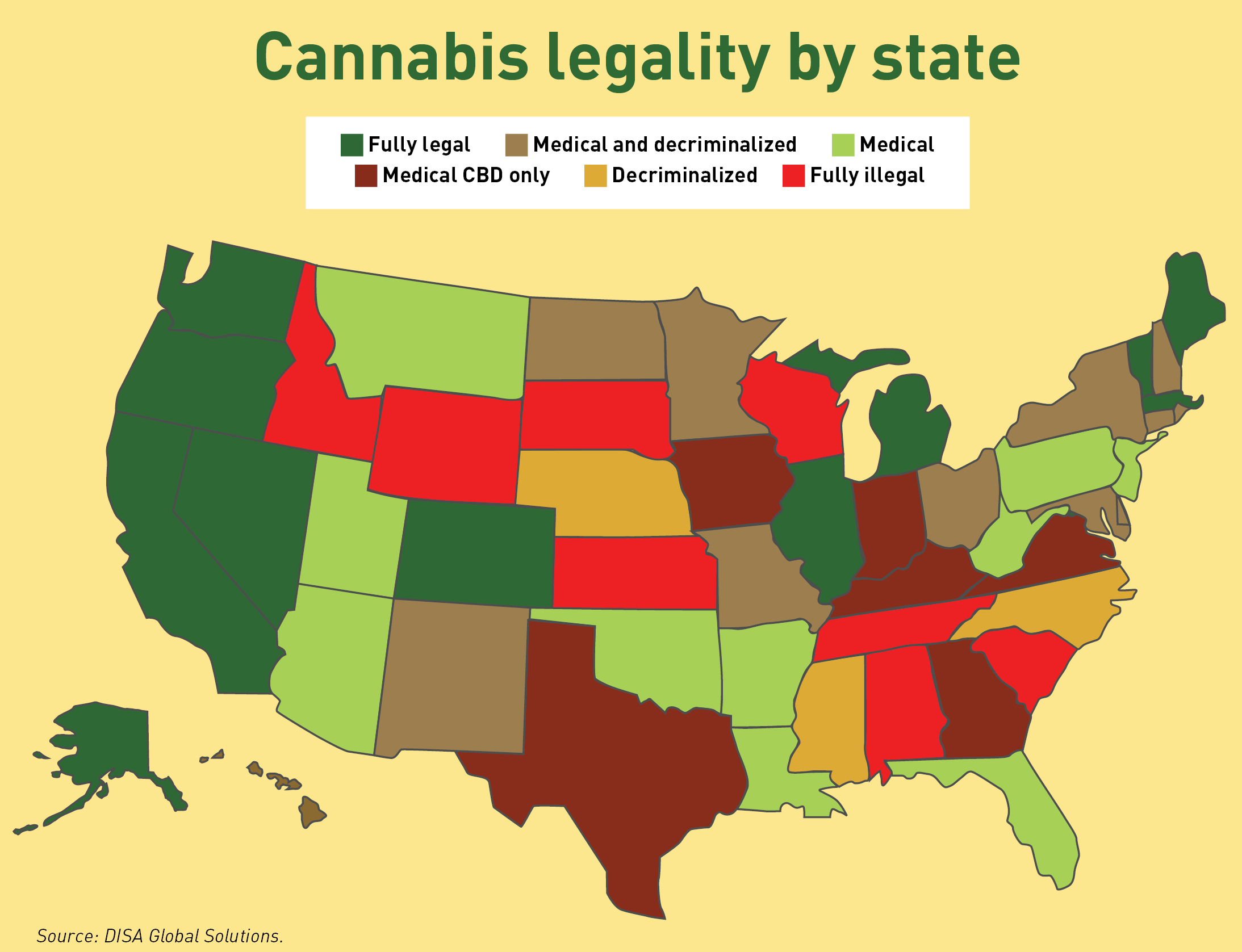
This recent Mother’s Day holiday, shoppers may have observed a different type of product among the typical mugs, greeting cards, and candles. “Get your mom the tools she needs to de-stress and treat herself,” wrote an ad for a popular craft and greeting card chain. Featured items included CBD-infused oils, exfoliants, sheet masks, and patches. While moms and marijuana might not seem a likely combination, as medical and recreational use have become widely available, consumer interest in cannabinoids has risen sharply. Cannabidiol, or CBD, has found its way into a variety of products, many of which claim dermatologic applications. “Recent years have brought an assortment of cannabinoid-containing topicals such as oils, lotions, emollients, creams, and patches specifically advertised for use on the skin,” observed a recent JAAD article (https://doi.org/10.1016/j.jaad.2020.01.036).
However, despite the explosion in popularity of these products, many questions remain regarding the efficacy and long-term effects of CBD use. This month, Dermatology World investigates the research currently available regarding CBD’s effects, its potential dermatologic uses, and what regulators are doing to ensure the safety and quality of CBD products available on the market. >>
What is CBD?
While many consumers have likely seen the letters “CBD” applied to a product, they may not necessarily know what it is, or how it is distinguished from other cannabis-derived components. In a recent Q&A with DW physician editor Kathryn Schwarzenberger, MD, (May 2020), Mark Bechtel, MD, professor and division director of dermatology at the Ohio State University Wexner Medical Center, described the differences between the many variants derived from cannabis. “Phytocannabinoids derived from the marijuana plant, Cannabis sativa, include: Δ (9) – tetrahydrocannabinol (THC) and cannabidiol (CBD),” Dr. Bechtel explained. “Medical marijuana contains THC, which produces the psychoactive effects, while CBD oil does not contain THC and has no psychoactive stimulation. Hemp is a strain of the Cannabis sativa plant species, which has been used in the past for industrial purposes. Hemp oil has only traces of CBD and THC. Because it contains high quantities of omega 3 and omega 6 fatty acids, it can be used as an emollient.”
Currently, CBD has become a popular ingredient in an expanding variety of products including soft chews, oils, pet food, and sparkling water. Although CBD is generally ingested, it has also become a common presence in topical products such as lotions and balms.
CBD also has a wide range of alleged benefits, not limited to: relief from seizures, pain, depression, anxiety, insomnia, inflammatory bowel disease (IBD), migraines, and nausea, although most CBD products are marketed for general relaxation purposes.
What does the evidence show regarding its effects?
Research regarding the effects of CBD is ongoing. To date, CBD has been found to effectively treat certain types of epilepsy in clinical trials, and in June 2018, the FDA approved the first drug containing CBD (Epidiolex) for the treatment of seizures associated with two rare and severe forms of epilepsy, Lennox-Gastaut syndrome and Dravet syndrome, in patients two years of age and older.
Beyond treatment for epilepsy however, there is a lack of strong evidence on the therapeutic benefit of CBD for any particular medical condition, and there are mostly negative reports regarding the effectiveness of CBD compared to placebo. A 2018 report submitted by the World Health Organization’s Expert Committee on Drug Dependence cited limited evidence that CBD may help with opioid, cocaine, and tobacco addiction; however, it reiterated that more research is needed (www.who.int/medicines/access/controlled-substances/CannabidiolCriticalReview.pdf).
What about CBD and dermatology?
Recent studies have examined the use of cannabinoids in dermatology for the treatment of psoriasis, atopic dermatitis, dermatomyositis, wound healing, and melanoma. However, current research shows the most promise for cannabinoids in the treatment of itch. A recent 2020 study in JAAD suggests that topical application and oral administration of cannabinoids may be effective at treating chronic pruritus related to several conditions, including neurogenic itch, atopic dermatitis, asteatotic eczema, allergic contact dermatitis, prurigo nodularis, uremic pruritus, and cholestatic pruritus (https://doi.org/10.1016/j.jaad.2020.01.036). Dr. Bechtel, who co-authored the paper, notes in his conversation with Dr. Schwarzenberger that, “Cannabinoids, based on their pharmacodynamics, have the potential to be a significant part of our anti-itch therapeutics. The delivery method for cannabinoids, which are highly lipophilic, determines efficacy due to different bioavailability.” The study reports that to date, the anti-pruritic effects of cannabinoids have been mainly observed in non-THC containing cannabinoids, such as CBD and PEA, “eliminating the concern for undesired psychoactive effects” (https://doi.org/10.1016/j.jaad.2020.01.036).
According to Robert Dellavalle, MD, PhD, MSPH, professor of dermatology and public health at the University of Colorado Medicine, topical cannabinoids are a promising alternative for patients wary of traditional therapies. “Dermatologists are always looking for additional therapies for treating itch — a symptom they hear a lot about from their patients. At the same time, many patients are actively seeking nonsteroidal therapies for skin disease,” he said. “Topical cannabinoids are promising new anti-itch, anti-inflammatory skin therapy, and given recent changes in U.S. law, topical CBD is now widely available.”
According to Dr. Dellavalle, cannabinoids may also show promise in the treatment of serious dermatologic conditions, although more research is needed. “I was impressed by photography of chronic wound healing following topical cannabinoid application, which was presented at a recent CannX cannabinoid conference in Lisbon, Portugal,” said Dr. Dellavalle, who receives stock options and expense reimbursement as a medical consultant for Altus Labs. “I am waiting to see those results in the peer-reviewed academic literature. Cannabinoids can clearly help treat pain. Currently, DEBRA UK is funding a randomized controlled trial of oral CBD for the treatment of pain and itch in epidermolysis bullosa patients, and I’m looking forward to seeing the results of that trial as well.”