Learn about the Academy's advocacy priorities and how to join efforts to protect your practice.
Advertisement
Advertisement
San Diego AAD musings
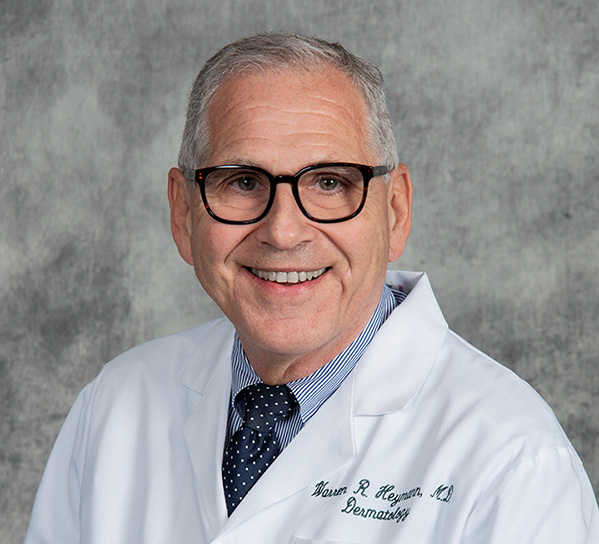
By Warren R. Heymann, MD, FAAD
March 20, 2024
Vol. 6, No. 12
Pre-AAD
Carlos Vieira, our second-year resident, was too polite to ask directly, so he sent our faculty an email stating the time and place of his first AAD presentation (“Tapinarof-induced acute generalized exanthematous pustulosis” at the Gross and Microscopic symposium) if we wanted to come. I would never miss such a proud moment — his joyful reply to my affirmative email was priceless.
On the plane last year, returning from the AAD in New Orleans, I wrote a commentary about artificial intelligence and ChatGPT. (1) On the flight to San Diego tonight my mind is wandering in different directions about AAD meetings past and present, contemplating what this year’s conference will bring.
There were two recent articles in the New York Times about Millennials — the first one reporting on their perception that they are aging (!) and the latter discussing the outlook of 33 year-olds, who represent the demographic peak of the generation (my oldest daughter turns 34 next week). (2,3) When I stroll the massive exhibit hall, I anticipate being in a sea of dermatologists far younger than I. I remember my first AAD meeting — in 1980 in New York. I was a first-year resident and was permitted to go for a day. My only recollection was being awestruck by the scope of the exhibits and aghast that men in $500 suits (expensive for the time) would agitatedly wait in line for a free bar of Dove soap. Over the years, I have learned the prudence of not bringing much back if anything at all. Marie Kondo prevails — I can do without the clutter of tote bags I will never use.
Speaking of exhibits and things not used, we will learn about new products and all their purported advantages (more than the adverse effects), but know that should we prescribe them, the prescription will likely be denied. Last week, I asked Carlos to prescribe the new combination of benzoyl peroxide/clindamycin/adapalene, with the expectation that our request would be rejected. It was, in record time (about an hour after submission). I may have been playing a game with that product. Still, the ongoing battle against step therapy and prior authorization continues — in my state of New Jersey, some promising legislation recently passed. (4) The AAD needs to continue its relentless pursuit of PA reform. (5)
What will be the buzz about today’s announcement that benzoyl peroxide may yield the carcinogen benzene? (6) Our acne experts will indeed opine as they help develop the AAD response to patients’ questions tomorrow. The AAD used to be a respite to get away from the office to avoid such inquiries, but the electronic umbilical cord makes that concept a relic. (I have not studied the data, but if benzoyl peroxide decomposes into a carcinogen, wouldn’t we have recognized that by now after decades of use?)
I smile whenever I recall Walter Shelley’s approach to the AAD meeting; “When I was young, I came to learn. Then I came to teach. Now I come to eat.” What I miss most about prior AAD meetings are the old focus sessions. I gave my first focus session at the AAD in San Antonio in 1987 on “Noninfectious Causes of Fever and a Rash.” Participants would sit at round tables of 10 or 12, just like at a wedding. Breakfast or lunch would be served. You would get to know people you never met before sitting to your right or left. By the time the session concluded, you would be satiated gastronomically and intellectually, while making new friends. It would be glorious to have these reinstated.
Carlos Vieira, MD, delivers his talk, "Tapinarof-induced acute generalized exanthematous pustulosis” at the Gross and Microscopic symposium in San Diego.
Education is the raison d'être for the AAD meeting. I’m sure Carlos is a tad nervous; perhaps he (and others) will take solace in that I still get a little stage fright, which is beneficial. If not overwhelming, it makes you focus with alacrity. This year I am giving two talks — one on urgent care in dermatology (in the emergency dermatology symposium) and the other as a focus session reviewing critical commentaries from the JAAD column, “A Clinician’s Perspective.” (If any DWI&I readers have never given a session at the AAD, I would encourage you to do so. Not only will you learn from the process, but you will also spread your knowledge, and deservedly feel more integrated in our stellar organization.)
In my holiday greeting for 2024, I said that this year I would have no New Year resolutions but rather a prayer for tranquility, although I expected tumult. Although we cannot dissociate ourselves from world strife, I hope these events do not strain the usual collegiality of the meeting. I applaud our outgoing President Terry Cronin’s thoughtful letters to all AAD members reminding us how the advisory committee functions in relation to the AAD Board, and how the AAD denounces bigotry and hate in all forms.
Post-AAD
Warren R. Heymann, MD, FAAD, poses at the ever-popular photo opportunity in the Sails Pavilion in the San Diego Convention Center.
What an outstanding meeting! The weather was perfect (compared to a prior San Diego AAD meeting hampered by biblical deluges), and the atmosphere civil, convivial, and (hallelujah) mask-free. Carlos nailed his presentation and my talks were well-received. Without grade inflation, I scored my CME assessments with a “5” to practically every talk I attended — because the speakers deserved it. As anticipated, during the conference the benzoyl peroxide-benzene controversy became headline news in the national media. (6) I understand that sorting this out is an immediate priority of the AAD, and we should be able to help guide our patients presently.
Every year I try to remember distinct highlights that I sear into my memory bank. Forty-two years ago, isotretinoin was introduced, which has changed the lives of countless patients afflicted with acne. Although there have been numerous attempts to use topical isotretinoin, I learned of a newly formulated topical isotretinoin ointment that has safely and dramatically improved patients with X-linked or lamellar ichthyosis (this will be the subject of an upcoming DWI&I). I was enamored by the Lila and Murray Gruber Memorial Lecture delivered by Brian J. Druker, MD, of the OHSU Knight Cancer Institute; he elegantly presented the development of imatinib for chronic myelogenous leukemia as the initial transformative prototype of targeted immunotherapy. I am still thinking about his image of the original report by Nowell and Humgerford describing the Philadelphia chromosome — only 300 words that changed science. Dr. Druker emphasized that when the cause of a disease is discovered, there is hope. I was moved by the video he presented of a 6-year-old girl who was diagnosed with CML and received imatinib within one month of its approval; what would have been a death sentence was obviated by the drug — she is now a nurse and mother. How wonderful that we can now marvel at the targeted therapies that we can offer our melanoma and Merkel cell carcinoma patients, extending their lives.
We are truly blessed to be dermatologists. This point was punctuated by our new AAD President, Seemal Desai, who delivered a heartfelt, passionate address focusing on service and unity in our vital specialty. We are in able, dedicated, visionary hands.
We are on the cusp of tremendous technological changes that will alter our practices. I am optimistic about the future of dermatology because of the commitment and energy of our colleagues who strive for excellence. I look forward to the AAD Innovation Academy this August in Seattle where I have the honor of delivering the Everett C Fox, MD Memorial Lecture, where I will focus on permanencies amidst innovation. I hope to see you there!
Nowell P., Hungerford D. A minute chromosome in human chronic granulocytic leukemia [abstract]. Science. 1960;132:1497.
All content found on Dermatology World Insights and Inquiries, including: text, images, video, audio, or other formats, were created for informational purposes only. The content represents the opinions of the authors and should not be interpreted as the official AAD position on any topic addressed. It is not intended to be a substitute for professional medical advice, diagnosis, or treatment.
DW Insights and Inquiries archive
Explore hundreds of Dermatology World Insights and Inquiries articles by clinical area, specific condition, or medical journal source.
The American Academy of Dermatology is a non-profit professional organization and does not endorse companies or products. Advertising helps support our mission.