Evaluating diagnostic accuracy across Fitzpatrick phototypes, skin of color
In a study published inJAAD, the authors evaluated potential skin of color (SoC) differences in diagnostic accuracy among medical trainees. A total of 121 medical students participated in didactic dermatology lectures and completed a dermatology diagnostic quiz depicting top dermatologic conditions in non-SoC (Fitzpatrick skin phototype I-III) and SoC (Fitzpatrick skin phototype IV-VI).
The conditions with the greatest disparities in accurate visual diagnosis were atopic dermatitis (79.3% correct in non-SoC vs. 58.7% correct in SoC), psoriasis (87.6% vs. 16.5%), malignant melanoma (92.6% vs. 71.9%), impetigo (71.9% vs. 50.4%), and basal cell carcinoma (95.0% vs. 47.9%). Both non-SoC and SoC students at comparable levels of training correctly diagnosed psoriasis, basal cell carcinoma, and malignant melanoma more frequently in non-SoC patient photographs than SoC photographs.
Read about how training and research gaps impact skin of color patients inDermWorld.
DermWorld Insights and Inquiries: Striving for hard facts about water softening in atopic dermatitis
With the success of dupilumab in managing atopic dermatitis (AD), and new agents on the horizon (IL-13 inhibitors lebrikizumab and tralokinumab; the IL-31 inhibitor nemolizumab; targeted anti IL-17, IL-22, and TSLP inhibitors; JAK inhibitors; and the PDE4 inhibitor roflumilast), it is easy to forget that simple maneuvers may help patients with AD, even with advanced therapies.
One of the controversies over the past few decades is how hard water affects patients with AD. Does it aggravate the condition? Should water be softened for patients with AD? Will softening water halt the atopic march? This commentary addresses some recent literature on the topic. Keep reading!
DermWorld Young Physician Focus: Fitting it all in
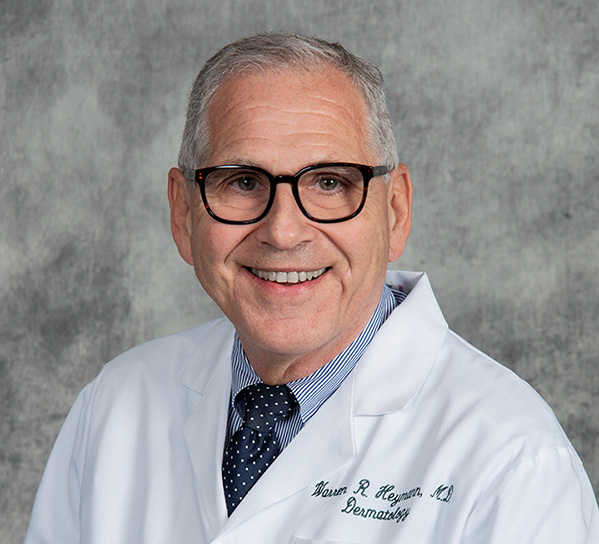
By this point in the summer, I look forward to the cooler air and return to the structure of the school year, heralding the arrival of fall. We’ve relished in all the fairs, festivals, and beach days, and while we’ve had a blast, we’re all tired and missing the serenity of a peaceful evening in the back yard. I recently read Dr. Warren Heymann describe our chaotic trying-to-cram-it-all-in world as “time compression,” a phrase that resonated with me. Between my busy dermatology practice, busy kids, and trying to sleep somewhere in there, it seems there aren’t enough hours in a day. Read more from DermWorld Young Physician Advisor Jenna O’Neill, MD, FAAD.
Seeking comments on urticaria guideline
The AAD is seeking member comments on draft clinical practice guidelines for the definition, classification, diagnosis, and management of urticaria. This is an update and revision of the international urticaria guideline that was endorsed by the AAD and published in 2018. Submit comments through Aug. 26.
COVID-19 breakthrough infections in vaccinated health care workers
A study published in The New England Journal of Medicine examined COVID-19 breakthrough infections of fully vaccinated health care workers at Israel’s largest medical center. From Dec. 19, 2020, to April 28, 2021, a total of 91% of employees received two doses of the BNT162b2 (Pfizer-BioNTech) vaccine.
[How has COVID-19 impacted dermatologists and their patients? Find out inDermWorld.]
Among 1,497 fully vaccinated health care workers who underwent reverse-transcriptase–polymerase-chain-reaction (RT-PCR) testing, 39 COVID-19 breakthrough infections were documented, for a breakthrough infection rate of 0.4%. Of the breakthrough cases, 46% were nursing staff, 26% were administration or maintenance workers, 15% were allied health professionals, and 13% were physicians. Only one infected person (3%) was immunosuppressed. Most breakthrough cases were mild or asymptomatic, although 19% had symptoms persist for more than six weeks.
Access Academy resources related to COVID-19 vaccines, including information on side effects of vaccines, encouraging patients to get vaccinated, and requiring employee vaccinations in the COVID-19 Resource Center.
The American Academy of Dermatology is a non-profit professional organization and does not endorse companies or products. Advertising helps support our mission.