












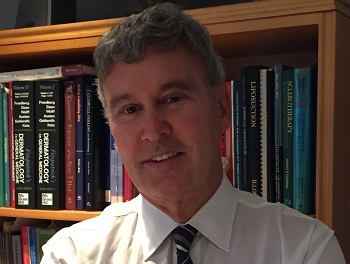
In 1979, dermatologists Harold Brody, MD, Arthur Gulick, MD, and Samuel Stegman, MD, sought to develop an organization for gay and lesbian dermatologists that would provide them the opportunity to meet and network with other gay and lesbian physicians in the specialty.
At the AAD Annual Meeting in New York City in 1980 — just before the onset of the deadly HIV epidemic — the Dermatology Specialists was formed to serve that purpose. Now known as the Gay and Lesbian Dermatology Association (GALDA), the organization was later incorporated as the GL Dermatology Association Foundation, Inc., in October 2011.
The group has been meeting ever since its initial inception in 1980, enabling hundreds of dermatologists and their allies — representing the LGBTQIA community from the U.S. and throughout the world — to network, advocate, provide peer support, and share ideas.
DermWorld Weekly: GALDA was initially formed to promote unity and offer networking opportunities for the gay and lesbian dermatology community at dermatology meetings. What was the impetus behind the development of these opportunities?
Dr. Brody: GALDA was founded out of need for a networking organization for LGBT dermatologists. In the late 1970s, when you went to a meeting, attendees came with their spouses of the opposite sex, and those who were LGBT felt out of place. There was no way to network among their own, and you couldn’t speak about being gay in public — many people, myself included, were out of the closet in night life, but in the closet at work. Many potential GALDA members were married to the opposite sex and were delighted to also attend these networking gatherings at the AAD Annual Meeting.
In 1980, we held our first official meeting of The Dermatology Specialists — a purposely ambiguous name for our group that eventually became GALDA. With this name, members could contribute without anxiety. The first meeting was attended by about 12 to 15 people. The next year it turned into 20, and then 30, and it just grew until 1986 when the HIV/AIDs phenomenon occurred. We lost a third of the membership to consequences of the AIDS virus.
DermWorld Weekly: The Dermatology Specialists, now GALDA, was formed just at the onset of the HIV epidemic. How did your organization adapt to this new phenomenon?
Dr. Brody: I was in private practice at the time of the onset of HIV, but I was also attending at Grady Hospital in Atlanta. We were seeing many gay patients at Grady Hospital’s charity clinic, and we realized that something was happening to our LGBT patients there and in our practices. Our networking group adapted its focus to understand this new disease.
DermWorld Weekly: What role did your organization play in efforts to provide support for dermatologists who were caring for HIV patients, as well as the patients themselves?
Dr. Brody: Through our connections made at the Dermatology Specialists, we created this pipeline for information and referrals — which included physicians at institutions like the charity clinic at Grady Hospital, Charity Hospital in New Orleans, and NYU-Bellevue, for example. We would refer to the dermatologists who we knew were willing to care for these HIV patients. Many physicians at the time refused to see these patients. We would connect patients and dermatologists in cities like San Francisco, New York, Minneapolis, Miami, Atlanta, and others.
DermWorld Weekly: What role did your organization play in efforts to investigate and understand this virus?
Dr. Brody: We tried to share and discuss what we were learning about the disease and the latest and most effective treatments. Obviously, back then there were no computers and internet, so we used our in-person meetings and made phone calls to discuss these issues.
Many of the HIV-related disorders are dermatologic in nature and require expertise in treating them. Treating Kaposi sarcoma (KS) with intralesional vincristine and vinblastine was important because KS skin presence outed these patients. The lesions of KS disappeared with this treatment! For patients with eosinophilic folliculitis, we learned about a lightbox with UVB that took away the vicious itching. We had patients lined up for these lightboxes. We shared all of this information among our networks.
Highly active antiretroviral therapy came out in 1995 and that’s when things really changed because the bad dermatologic virus cases dried up and disappeared. People started feeling great, but we started to see profound lipoatrophy, interpreted as a red flag for the disease. Fillers weren’t out there yet except for collagen, so several of us got together and started collecting information on using microdroplet silicone to treat lipoatrophy — we published the first of a series of articles on silicone in 2004 for HIV lipoatrophy, based on the patients we were treating with protocols in the late 1990s. We wouldn’t have been able to do all this without GALDA and our gay patients, who were seeing us as empathetic dermatologists. This provided relief to those lipoatrophy patients and still does so.
DermWorld Weekly: After the HIV epidemic eased up, GALDA established a mentorship program for its members. What do these opportunities entail and why are they so important?
Dr. Brody: Through industry support and individual contributions, we implemented a mentorship program in the early years of the 21st century based on the Women’s Dermatologic Society’s model. Our donors provide money for air travel and hotel for up to a week and up to a certain amount for mentees to study with a mentor to focus on one of seven areas of focus: medical dermatology, surgical dermatology, cosmetic dermatology, dermatopathology, pediatric dermatology, advocacy, or complex immunodermatology. It gives an opportunity for LGBT residents and young physicians to see someone who is like them in these different roles. Each of these mentees is required to write up a blurb on what their mentorship was like for our newsletter. It’s been exciting to watch.
DermWorld Weekly: What is the significance of GALDA’s 40th anniversary?
Dr. Brody: The history of an organization is so important because you have to know your history in order to move forward. I think this 40th anniversary celebration is first a celebration of survival for GALDA and second, a history lesson for LGBTQ+ dermatologists that we can be proud of. It’s also a promise of hope for the future for non-prejudicial success for our residents and our physicians and surgeons. That, to me, is what the 40th anniversary of GALDA represents.
To learn more about GALDA, visit www.glderm.org.
Harold Brody, MD, FAAD, is co-chair of the Board of Directors of GALDA. He is a dermatologist and a dermatologic surgeon at Atlanta Dermatology. .
