AK draft guidelines released: Submit your comments
Submit your comments for the draft clinical practice guidelines of care for the management of actinic keratosis through July 27. The guideline workgroup, which includes experts in AK management and a patient representative, will review your comments and, if applicable, edit the guidelines based on your feedback.Read the draft guidelines and submit your comments.
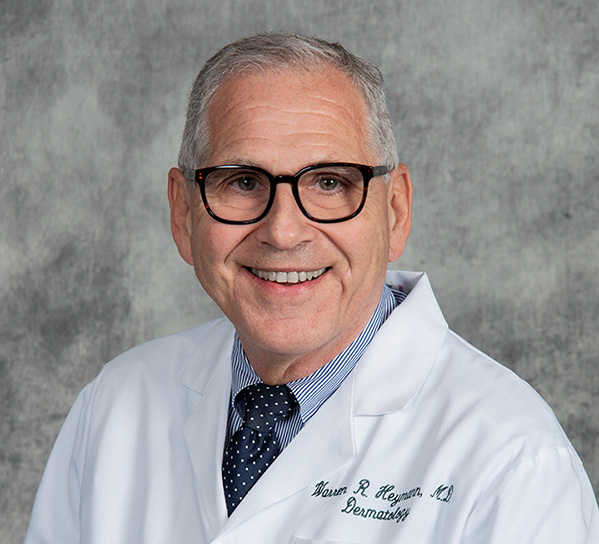
DW Insights and Inquiries: Why you should hear about the red ear syndrome
Is it my imagination that the “by the way” comments at the presumed end of a patient encounter cause the most angst? Usually, it’s something like “Oh, I forgot to mention that I’m losing my hair!” Recently, at the conclusion of an extended visit, a middle-aged woman stated that periodically, her left ear would become fiery red for several hours, accompanied by a burning sensation. There was no evidence of disease that day — my quick differential of a contact dermatitis, Pseudomonas cellulitis, relapsing polychondritis, or chilblains, were not pertinent. All I could do was punt — “Why don’t you see me when you get one of these episodes? I’ll take a look and assess it at that time” (while thinking that I have no idea what she has).
Perhaps my patient is experiencing the red ear syndrome (RES); I was not familiar with this entity until I read the article by Cinats and Haber. Wollina contends that RES is one of a triad of orphan disorders that dermatologists should recognize, along with the red scrotum and red scalp syndromes.
RES was first described by Lance in 1996, detailing the features of a dozen case reports. The following is the first paragraph of his discussion: “What are the characteristics of the red ear syndrome? It is commonly unilateral and implies discomfort or burning pain as well as a change in color. The color change may involve the adjacent part of the cheek. The pain may radiate to the forehead (V-1), occiput (C-2), or a strip behind or below the mandible (C-3). It is often brought on by exercise, exposure to heat, touch, chewing, or neck movement.” Prior to publication of this article, Dr. Lance stated that he presented three of these patients to the Australian Association of Neurologists in a paper titled “The Mystery of One Red Ear.” Keep reading!
Proposed 2021 Medicare changes: What should dermatologists expect?
In a new episode of the AAD’s Dialogues in Dermatology podcast, Brad Glick, DO, talks with Mark Kaufmann, MD, about Medicare policy: What’s ahead in 2021? Among the changes they discuss are the anticipated changes to E/M coding that will allow physicians to select the appropriate level of service based on medical decision making (MDM) or total time. This episode is complimentary for Academy members. Listen now.
Topical resorcinol as long-term treatment of mild to moderate hidradenitis suppurativa
According to a research letter in the British Journal of Dermatology, resorcinol may be an alternative to antibiotic therapy for hidradenitis suppurativa (HS) patients. Sixty-one patients with Hurley stage I or II HS used topical 15% resorcinol in an oil/water cream formulation applied to HS lesions once daily for 12 weeks. At four weeks, 52% of patients had achieved clinical response. By 12 weeks 85% of patients had achieved clinical response, and number of nodules decreased by 80% and number of abscesses by 87%.
In this month’s Dermatology World, experts discuss the benefits of personalized treatment plans for patients with HS. Read more.
Dermatology World’s First Person column is the place to tell it. Share your personal stories about the thrills, challenges, and insights of practicing dermatology — we’d like to know what’s on your mind. Email your story idea to dweditor@aad.org. Wondering what an ideal submission looks like? Check out “In praise of redneck dermatology.”
Dermatology World reserves the right to edit, publish, or not publish any submitted content, and to request and disclose the author’s relevant conflicts of interest.
On the front lines in Boston
DW Weekly talks with Sarita Nori, MD, a dermatologist at Atrius Health in Somerville, Massachusetts, about how she has been caring for patients on the front lines of the COVID-19 crisis.
DW Weekly: You have been volunteering at the Boston Hope field hospital, which was constructed inside the Boston Convention and Exhibition Center. Can you describe what it’s like working in that space?
Dr. Nori: It’s amazing. If you can imagine the exhibit hall for the AAD conference — they converted that into rows and rows of 10 by six-foot cubicles, erecting approximately 1,000 rooms in five days. It’s basically a place for hospitals to decompress their load and send COVID patients who are stable, and maybe just need oxygen via nasal cannula for a few more days.
DW Weekly: Have there been instances where you’ve had to refer back to your medical school training while caring for patients?
Dr. Nori: I finished an internal medicine residency 18 years ago, and some of it came back, but I definitely relied on my hospitalist app to look up some things. I also got to pull out my stethoscope to listen to lungs, which was a little nerve-wracking. I had one patient who was de-satting, and I knew to put him prone on his belly to increase the number of alveoli that were being recruited. That was something I learned from reading ICU and ER blogs.Read more.
Academy seeks assistant secretary-treasurer nominees
Applications and nominations are now being solicited for the position of assistant secretary-treasurer for the American Academy of Dermatology and AAD Association for the term beginning March 2022.
Members interested in serving the Academy in this position should have significant administrative and financial management experience. The position of assistant secretary-treasurer requires a considerable time commitment. Applicants must be able to serve for six years: three years as assistant secretary-treasurer and three additional years as secretary-treasurer.
To learn more about the position and apply, visit www.aad.org/AST. Applications are due Jan. 4, 2021. Questions may be directed to Cyndi Del Boccio in the AAD Executive Office at (847) 240-1041 or cdelboccio@aad.org.
Register for HHS Telemedicine Hack
To support wide adoption of telemedicine, the U.S. Department of Health and Human Services (HHS), Assistant Secretary for Preparedness and Response is partnering with the ECHO Institute at the University of New Mexico and the Public Health Foundation’s TRAIN Learning Network to deliver a 10-week, virtual peer-to-peer learning community called Telemedicine Hack.
When: Wednesdays, July 22 - Sept. 23, 2020, noon - 1 p.m. ET
Key components include five teleECHO sessions on key topics such as workflows, documentation, reimbursement, highlighting best practices and case studies; five virtual "office hour" discussion panels; inter-session peer-to-peer learning facilitated by virtual discussion boards, and CME/CU credits available for attending.
There is no cost to join the Telemedicine Hack initiative. Register now.
The American Academy of Dermatology is a non-profit professional organization and does not endorse companies or products. Advertising helps support our mission.