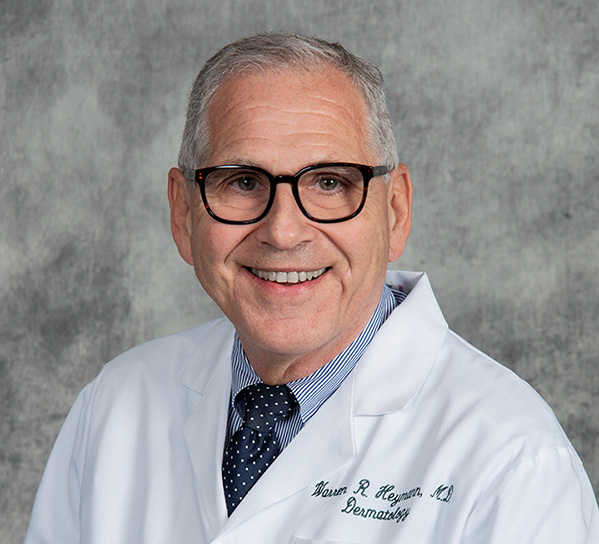
AADA advocacy results in FDA approving iPLEDGE modifications
The U.S. Food and Drug Administration (FDA) has announced important changes to the iPLEDGE Risk Evaluation and Mitigation Strategy (REMS) program for health care providers, patients, and pharmacies. As a direct result of AADA advocacy efforts on behalf of dermatologists and patients, the patient risk categories were reduced from three options to two: patients who can get pregnant, and patients who cannot get pregnant. These changes will go into effect Dec. 13, 2021.
Health care providers must assign and confirm their currently enrolled patients’ risk category for each patient upon their first login into the iPLEDGE REMS website on or after Dec. 13, 2021. Prior to this modification, the iPLEDGE website and iPLEDGE REMS Contact Center phone service will undergo maintenance starting Friday, Dec. 10, at 11:59 p.m. ET until Sunday, Dec. 12, at 11:59 p.m. ET. During this time, iPLEDGE will be unavailable. Prescribers should ensure that any patient whose iPLEDGE authorization expires Dec. 11-12, 2021, is instructed to obtain their prescription before 11:59 p.m. ET on Dec. 10, 2021.
DermWorld Insights and Inquiries: Probing pediatric pigmented purpuras
Pigmented purpuric (PP) eruptions are often referred to as “benign” pigmented purpuras. Although that may be true in the medical sense, these dermatoses may be very distressing for patients (or their parents). Angst may be due to any (or all) of the following: confirming the diagnosis, concern for systemic disease until a diagnosis is rendered, an unpredictable prognosis, a relative lack of effective therapy, and the cosmetic appearance. Biopsies and/or appropriate serologic studies should be considered when there are other diagnostic considerations such as leukocytoclastic vasculitis, cutaneous T-cell lymphoma, hypergammaglobulinemic purpura of Waldenström, or cryoglobulinemia. Keep reading!
DermWorld Young Physician Focus: Staying connected
If being a good dermatologist relied solely upon rote memorization and image recognition, we truly could be replaced by robots. However, patients recall how you treated them, not just that you made a correct diagnosis or fixed their problem. Although learning the porphyria subtypes and identifying caterpillars are essential for surviving residency, I’m sure I learned more from just observing my attendings’ interactions with patients than from my genodermatoses textbook. Now that I am a few years removed from that time in my life, I value those experiences even more than I did then. Read more from DermWorld Young Physician Advisor Jenna O’Neill, MD, FAAD.
Scabies treatment may be less effective
According to a letter in the Journal of the European Academy of Dermatology and Venereology, almost two-thirds of the patients who failed permethrin responded to another topical treatment, which suggests a specific resistance to permethrin rather than compliance. Of 155 patients with scabies treated with permethrin 5% cream, 96 patients were reported as having treatment failures at one to two weeks follow-up after treatment. Benzyl benzoate 25% cream was subsequently prescribed to 75 patients, with 47 achieving clearance. A total of 33 patients received oral ivermectin therapy with only one experiencing persistent disease.
Read more about considerations for dermatologists when treating patients experiencing homelessness inDermWorld.
According to a study inJAAD, the authors found that hospital readmission rates for discharged patients with a primary diagnosis of hidradenitis suppurativa (HS) increased over time and is comparable to those readmitted for heart failure.
The 30-day readmission rate for HS was 17.8%, the 90-day rate was 33.9%, and the 180-day rate was 48.6%. In comparison, the respective rates of readmission for heart failure patients are 22%, 37.9%, and 48%.
Experts discuss the benefits of personalized treatment plans for patients with HS in DermWorld.
AAD mourns the passing of Gloria Flippin Graham, MD, who helped establish the Women’s Dermatologic Society
The Academy recently learned with sorrow of the passing of Gloria Flippin Graham, MD, on Sept. 30, at the age of 86. Dr. Graham, of Pine Knoll Shores, North Carolina, was born on March 3, 1935, in Durham, North Carolina. She earned a Bachelor of Science in General Science from Wake Forest in 1957, graduating Magna Cum Laude, and received her Doctor of Medicine from Bowman Gray in 1961 as one of six women in her class. She then completed her internship in medicine at Vanderbilt University in 1962 as the only female intern in the hospital.
During her residency at the University of Virginia, she worked with Dr. Peyton E. Weary, former president of American Academy of Dermatology (AAD), to develop a culture for pityrosporum orbiculare that causes tinea versicolor. In addition to serving on the attending faculty of Wake Forest Hospital, she also served on the faculty of the University of North Carolina at Chapel Hill and Duke University. Early in her career, Dr. Graham took a special interest in cryosurgery, and wrote more than 100 publications and two books on the subject. She was one of the founders of the American College of Cryosurgery and served as vice president of the International Society of Cryosurgery. Dr. Graham was also one of a group of women who established the Women’s Dermatologic Society in 1973 and served as president from 1997-1998.
Dr. Graham received numerous honors and awards, including: the 1998 Practitioner of the Year Award from The Dermatology Foundation; the Rose Hirschler Award from the Women’s Dermatologic Society in 2001; Woman of the Year by the Women’s Residence Council at Wake Forest University in 1982; The AAD Everett C. Fox, MD, Memorial Lectureship Award in 2003, and the AAD Honorary Membership Award in 2005. She also received the Distinguished Achievement Award from Wake Forest University School of Medicine in 2007.
To honor her late father, Dr. James Meigs Flippin, and other rural doctors, Dr. Graham and Dr. Josephine Newell co-founded the Country Doctor Museum in Bailey, North Carolina in 1967. Dr. Graham and her first husband, Douglas, started the Wilson Dermatology Clinic in 1966. She later married Dr. James Graham, a dermatopathologist. To leave condolences or read more about Dr. Graham, visit www.noebrooks.net/obituary/Gloria-Graham.
HHS renews public health emergency
Department of Health and Human Services (HHS) Secretary Xavier Becerra has renewed the public health emergency (PHE) for COVID-19 effective Oct. 18, 2021. This extension will continue all telehealth waivers and other PHE-related flexibilities for another 90 days. Unless it is further extended, the current PHE determination will end Jan. 16, 2022. The Biden administration has indicated that it intends to provide the health care community with 60 days’ notice before allowing the PHE to lapse.
Advertisement
The American Academy of Dermatology is a non-profit professional organization and does not endorse companies or products. Advertising helps support our mission.