Do dutasteride and finasteride increase mood disorder risk in men with androgenetic alopecia?
Authors of a Brief Report published in JAAD examined mood disorder (MD) risk in male androgenetic alopecia (AGA) patients treated with 5-alpha reductase inhibitors (5ARIs). They analyzed 355 dutasteride-treated patients, 25,703 finasteride-treated patients, and 86,815 controls. Dutasteride and finasteride were not associated with MD risk. Dutasteride-treated versus finasteride-treated patients had similar MD risk.
[Oral vs. topical finasteride: Sexual, neuropsychiatric AEs. Read more.]
5ARIs for AGA treatment were not associated with increased MD risk, with dutasteride and finasteride demonstrating similar safety profiles. The authors noted that MDs are unlikely with these treatments, although this was a slightly higher risk for older and white patients.
Minoxidil, finasteride, dutasteride monotherapy for male pattern hair loss. Read more.
DermWorld Insights and Inquiries: A potentially effective itsy-bitsy therapy for spider angiomas — Topical timolol
The joys of compressing the central arteriole of a spider angioma (SA), letting go, and watching the peripheral vessels fill have never diminished. I can reassure patients that the lesion is benign, tell them it may resolve with time (especially if predisposing factors are removed), and offer successful treatment options if desired. SAs are common lesions that may be secondary to underlying conditions, notably pregnancy or chronic liver disease. Although destructive modalities such as lasers are highly effective, topical timolol may be a valuable option for those who prefer a nonsurgical approach to therapy. Keep reading!
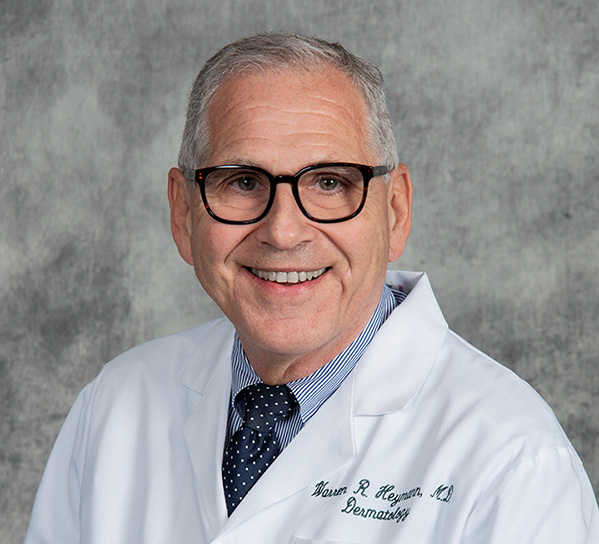
Warren R. Heymann, MD, FAAD, selected as DermWorld physician editor
Warren R. Heymann, MD, FAAD, will serve as the next physician editor of the award-winning publication DermWorld. Dr. Heymann was chosen for the role by the American Academy of Dermatology’s Ad Hoc Task Force on DermWorld Editor Selection from a wide pool of applicants, with the choice approved by the Board of Directors.
Dr. Heymann is a dermatologist at HMGS Dermatology and professor of dermatology and pediatrics at Cooper Medical School of Rowan University in Camden, New Jersey. He currently authors the popular DermWorld Insights and Inquiries column featured in DermWorld Weekly. His term will commence on Jan. 1, 2026.
If you're a huge fan of DermWorld Insights and Inquiries and are concerned about the future of the column, don’t fret! Dr. Heymann will continue to write DermWorld Insights and Inquiries, but it will now be featured in the DermWorld print magazine as well as every month in an issue of DermWorld Weekly.
The Academy welcomes Dr. Heymann to the helm of DermWorld!
Academy mourns the passing of Eugene Joseph Van Scott, MD
The Academy recently learned with sorrow of the passing of Eugene Joseph Van Scott, MD, a giant in dermatology, at the age of 103. He served as a director on the Academy Board from 1961 to 1963.
Dr. Van Scott is best known for his groundbreaking discovery related to the use alpha hydroxy acids, including glycolic acid and lactic acid, for ichthyosis and aging-related changes.
Dr. Van Scott served as the founder and first chief of the dermatology branch at the National Cancer Institute, National Institutes of Health (NIH), from 1953 to 1968, where he made significant strides in cancer treatment. His work led to the development of the first effective treatment for cutaneous T-cell lymphoma, for which he was honored with the prestigious Albert Lasker Clinical Medical Research Award. His research also advanced the use of methotrexate in treating psoriasis, further solidifying his reputation as a leader in the field.
In honor of Dr. Van Scott’s legacy, the Academy has made a donation to Camp Discovery.
CMS reverses decision to hold Medicare payments
CMS reversed its Oct. 15 decision to hold Medicare reimbursement payments. CMS has since indicated it will be processing and issuing payments in a timely manner. No payments should have been delayed as statute requires all claims to be held for a minimum of 14 days. Read more.
FDA warns of potential risks with radiofrequency microneedling
The FDA has made consumers, patients, and physicians aware that serious complications have been reported with certain uses of radiofrequency (RF) microneedling devices. The FDA is aware of reports of serious complications including burns, scarring, fat loss, disfigurement, and nerve damage, and the need for surgical repair or medical intervention to treat injuries.
The FDA is asking physicians to report any complications related to the use of these devices for dermatologic or aesthetic skin procedures. If you think there’s been a problem with your device, the FDA encourages you to report the problem through the MedWatch Voluntary Reporting Form.
2024 MIPS final scores now available, Targeted Review request deadline Nov. 14
CMS has released 2024 MIPS performance feedback and final scores, which determine your 2026 payment adjustment. Adjustments may be positive, negative, or neutral and will apply to Medicare payments for covered professional services in 2026. Sign in to the QPP website to access your feedback.
CMS is accepting 2024 MIPS Targeted Review requests until Nov. 14 at 8 p.m. EDT. You can request a Targeted Review if you believe there is calculation error of your MIPS payment adjustment factor. Learn more using the 2024 Targeted Review User Guide.
Advertisement
The American Academy of Dermatology is a non-profit professional organization and does not endorse companies or products. Advertising helps support our mission.