












This month's news from across the specialty
What's hot
June 1, 2020
In this monthly column, members of Dermatology World's Editorial Advisory Workgroup identify exciting news from across the specialty.

We may need to channel Carl Sagan to appreciate the vastness of the recently released billions upon billions of mapped base pairs from the Pan-Cancer Analysis of Whole Genomes Consortium. More than 15 working groups of hundreds of scientists released 23 papers across several Nature journals including six canons in Nature. Fortunately, melanoma was included in the 38 tumor types studied. Cutaneous melanoma (n=86), acral melanoma (n=20), and mucosal melanoma (n=1) are prominently featured in the six core Nature studies. 2,648 whole-cancer genomes were matched with non-cancerous tissue samples and 1,188 transcriptomes. The scale of the technical, legal, and ethical challenges eclipse those of the sequencing of the first human genome in 2001. To review, it is very challenging to determine the integrity of the three billion base pairs within one nucleus. Interrogating a representative sampling of the heterogeneous neoplastic nuclei across the entire tumor, in addition to the normal stroma and infiltrating lymphocytes, is a more complicated task. This milestone illustrates the tools and concepts that permit comparisons of huge amounts of data across tumor types. While we might be intimidated by the scale of the information within tumor genomes, this global effort defines a framework onto which we clinicians can now contribute our outcomes data to focus tomorrow's cures.

A research letter published in the JAAD from Penn State made me reflect upon the daily conversations we all have with our patients regarding risk. The effects of information framing on subsequent decision making were studied via this cross-sectional survey. In all, 654 surveys were completed. Presented in the surveys were eight hypothetical scenarios regarding dysplastic nevi and their associated risk of melanoma. For each scenario, the likelihood of choosing surgical excision was queried. The survey participants were highly educated — about 75% had at least an undergraduate degree, and just over 95% of participants had at least some college experience or an associate degree.
In all scenarios, most participants elected treatment, with rates ranging from 51.5-92%. Negative framing highly influenced the decision to pursue surgical management. Scenarios presenting dysplastic nevi as “precancer” or “premelanoma” had 90.2% and 92.0% of participants selecting surgical treatment, respectively. Analogous scenarios, such as “0.01% risk of cancer” versus “99.99% risk NOT cancerous,” and “11% risk of cancer” versus “89% risk NOT cancerous” demonstrated higher percentages of survey takers opting for treatment in the negatively framed scenarios presenting the “risk of cancer.” Prior diagnoses of dysplastic nevi or skin cancer were not significantly associated.
Amidst our COVID-19 pandemic, I have become attuned to information framing and the effects of fear and anxiety on how we process what we see and hear. Data is constantly changing, and we have become barraged from all directions by information, a great deal of which stems from unproved observations and opinions. Though it seems that all convention and tradition have yielded way to the new ground rules of this pandemic, this research letter reminds us of our duty to offer a “balanced delivery” to our patients and community. With regard to the delicate balance between paternalism and autonomy, our words do matter.

At the time of this writing, I had just finished my first week of being deployed to work as a hospitalist on the COVID-19 floors. Before I started my deployment, I had no idea what to expect. Because I had not used a stethoscope in 30 years, I was afraid that I would do more harm than good. However, I soon realized that my concerns were unwarranted. My role was to perform the physical exam, which turned out to be the least important factor in the decision-making. Each morning before rounds with the chief of pulmonary medicine, I would examine my patients and inform my resident “buddy” whether I thought the patient looked well enough to be discharged. Then at rounds, my resident would present the cases to the chief pulmonologist, who was overseeing the care of all 250 COVID-19 cases in our hospital. He would review the imaging, inflammatory markers, and the O₂ saturations. There were times in which I said the patient looked totally fine and looked well enough for discharge. However, the chief pulmonologist would recommend that the patient not be discharged, because based on his review of the chart, “these types of patients often crash” — and sure enough, the next day, the patient did crash. There were times in which the COVID-19 test was still pending because the patient was a new admission from the night before. With authority, based on review of the data in the chart, the pulmonologist would predict whether or not the COVID-19 test would be positive, and six hours later, I would discover that he was right every time.
This experience revealed to me how different dermatology is, because we dermatologists still rely on the physical exam. While we may perform a biopsy to confirm our diagnosis, the physical exam is often needed to put the picture together. This reminded me of an inpatient consult I saw years ago. The patient was admitted for presumed Stevens-Johnson syndrome. When I saw the patient with my resident, I told the resident to call the admitting physician to let him know that the patient had pemphigus vulgaris, not Stevens-Johnson syndrome. The admitting physician’s reply was: “Based on what?” I told the resident: “You tell him — based on physical exam.”
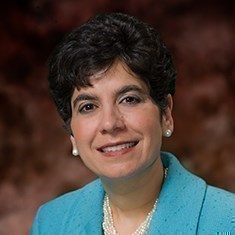
Last month, when I started to think about what my “hot topic” was going to be for this column I had several ideas regarding my subspecialty interest of contact dermatitis and patch testing, but that was when the world was a much more normal place. When it came time to actually submit my column, I could think of nothing other than COVID-19. We have all received valuable guidance from the Academy, AMA, NIH, CDC, our specialty societies, and so many leaders in our field on how to approach outpatient care during the COVID-19 pandemic. Each individual, group, and practice has had to grapple with this reality in one way or another and create a new process for seeing those patients who need our help.
Our own clinic significantly limited in-person visits to those who are deemed urgent and we are also completing inpatient and emergency room consults through televideo whenever possible. Our group has had a long history of store-and-forward teledermatology but had always hesitated on jumping into live televideo visits. COVID-19 has changed that. Our institution onboarded 2,300 physicians in a matter of three weeks to a single televideo platform. Dermatology has steadily increased the number of televideo visits thanks to a very hard-working group of support staff. It is nice to be caring for patients again, even if virtually, and they are happy that their skin concerns are being addressed. I have been amazed at how quickly we have embraced this new platform when just two months ago we were so resistant to the idea.
I am proud to be part of a specialty that started the dialogue early and has chosen to care for their patients in responsible ways that support the health of the community, our patients, and the greater health care system.
