Learn about the Academy's advocacy priorities and how to join efforts to protect your practice.
Advertisement
Advertisement
What role can dermatologists play in developing a COVID-19 vaccine?
Clinical Applications
Dr. Schwarzenberger is the former physician editor of DermWorld. She interviews the author of a recent study each month.
By Kathryn Schwarzenberger, MD, October 1, 2020
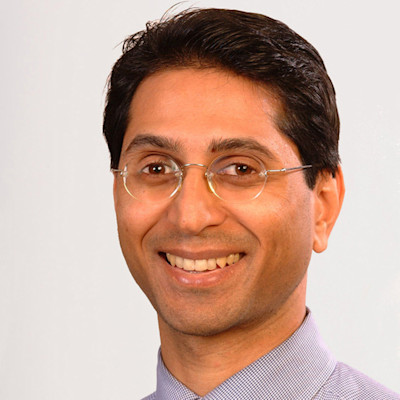
DermWorld talks to Adnan Nasir, MD, PhD, medical director of dermatology research at Wake Research Associates at UNC REX Hospital in Raleigh, North Carolina, about his involvement in COVID-19 vaccine clinical trials.
DermWorld: Tell us a little about Wake Research Associates.
Dr. Nasir: Wake Research Associates is a multi-disciplinary clinical trial unit. For 20 years we have conducted inpatient and outpatient trials on treatments for a variety of skin conditions including skin cancer, atopic dermatitis, psoriasis, and alopecia areata. We have the capability of overseeing phase 1 through phase 4 trials.
DW: How did you get involved in the COVID-19 vaccine clinical trials?
Dr. Nasir: The Research Triangle of North Carolina is a hub of biomedical research despite its small size. Our state, as a coronavirus hot spot, has had a high number of cases of infection and hospitalization. We were asked to be one of 89 sites in the U.S. selected for phase 3 clinical trials on coronavirus vaccines. Our center is the first in the world, outside of the NIH, to administer an investigational mRNA Sars CoV-2 vaccine as part of a phase 3 clinical trial. The studies we are overseeing are a part of Operation Warp Speed. Vice President Mike Pence and FDA Commissioner Stephen Hahn, MD, came to the North Carolina Biotech Center to meet with us and some of our study patients. We have embarked on this study as well as additional studies as part of our response to the pandemic.
“Our center is the first in the world, outside of the NIH, to administer an investigational mRNA SARS CoV-2 vaccine as part of a phase 3 clinical trial. ”
─ Adnan Nasir, MD, PhD
DW: Tell us about the vaccine for which you are currently conducting a phase 3 trial.
Dr. Nasir: We are part of the phase 3 trials for Moderna and the National Institutes of Health (NIH) vaccine. This is a nanoparticle-based vaccine and it’s an RNA-based lipid nanoparticle that encodes the spike protein of the coronavirus. In early phase 1 and 2 human studies, it has been shown to be safe and induce a cell-mediated immune response and an antibody response. It’s been shown in non-human primates, rhesus monkeys, to protect from the disease. In a recent article published in the New England Journal of Medicine (doi.10.1056/NEJMoa2024671) not only did investigators see that antibodies were produced, they challenged these animals with the live virus, and they were able to show protection.
DW: Tell us about the phase 3 trial for this vaccine.
Dr. Nasir: The phase 3 trials are testing 30,000 patients throughout the United States with vaccine and with placebo. These patients are those who are at high risk, such as people who are involved in working with the public — schoolteachers, physicians, grocery store workers, meat packing plant workers. The study includes people from a variety of ethnic groups, and with a range of underlying diseases that make one susceptible to COVID-19. This study will follow people over time. They are getting two doses: one baseline and one booster in 28 days.
DW: What are the risks for patients involved in vaccine trials in general?
Dr. Nasir: The trials we’re doing have risks associated with them like injection-site reactions. One of the reasons that dermatologists supervise these trials is that you can have skin reactions to vaccines, and we are uniquely trained to evaluate those types of reactions. Some trial subjects can have systemic reactions: fever, malaise, or chills. Then there are unknown reactions. We don’t anticipate ADE or CDE because that has not been shown in the animal models for this particular vaccine. In fact, in the primate trials for this vaccine — results of which were recently published in the New England Journal of Medicine — investigators challenged the animals with the live virus and they did not get sicker, but recovered and their antibodies were protective, and thus not enhancing infection.
DW: When did you get started with the phase 3 study and how long are you expected to conduct the trial?
Dr. Nasir: We saw our first patient in the beginning of August. However, to get all of our ducks in a row for the trial, we began our preparations at the start of our state’s mandatory shelter-in-place orders. We had to make sure that we had all the facilities, people, and staff in place. We had to train our clinical and ancillary personnel on the details of the protocol. We had to screen study participants for prior infection with SARS CoV-2. This meant we had to do COVID-19 testing on all of our potential volunteers for the study, so we set up tents outside to do the testing. The trial is double blinded and placebo-controlled. So, we had our pharmacists prepare the vaccine separately from the staff who administered the vaccine, and separately from the clinicians who evaluated the participants. We also had to observe study volunteers following the administration of vaccine prior to discharge. There were a lot of logistics to organize for the trial. We expect to complete the trial by November, which is very fast in this space.
DW: What do these trials entail in terms of space and facilities?
Dr. Nasir: We have a separate wing of our research environment that is dedicated to this trial. It’s about 10,000 square feet of space. We have exam rooms which are separate from a pharmacy area which are separate from an injection area. We also have a lab to draw blood for research purposes of the study. The clinicians are compartmentalized to the exam areas in order to maintain blinding of investigators. We have an outdoor area where people are screened for COVID-19 — that’s the typical nasopharyngeal swab — and there’s a separate testing facility that can get results within 24 hours.
DW: How did you go about recruiting patients for this?
Dr. Nasir: We’re expected to see more than 350 volunteers. Normally, we reach out to patients in our practice and local practices, but, for this study, we didn’t have to recruit patients. There has been an outpouring of interest in our community to do something to help move forward with the coronavirus pandemic. These volunteers are really lining up and ready to go. They are coming from all walks of life, including the health care community. For other studies, we do have to seek out participants through registries, AAD affiliated societies, and social media because it may be a rare disease or an invasive therapy with a high risk associated with it. For this particular study, however, we met our enrollment limit almost immediately.
DW: What do these trials entail on the patient side?
Dr. Nasir: Before we do anything, we consent the trial volunteers— we talk to them about the trial, the risks and benefits, the procedures they can expect, their time and travel requirements, etc. Then we have staff do an intake to make sure the volunteers are not in any competing studies and haven’t had a vaccine elsewhere. Then they have baseline labs performed and we give them a full physical exam to make sure they are healthy. Then we have a separate pharmacist in a blinded area mix the vaccine and a nurse administer the vaccine, so I, as an investigator, have no idea if someone got a vaccine or a placebo. The trial participants are monitored to make sure they don’t have any immediate reaction and are then allowed to go home. We then see them in a month, examine them again, administer the booster vaccine or placebo again, and do labs again. Then there are subsequent labs to see if they’ve had an immune response.
DW: When do you expect to see results?
Dr. Nasir: Hopefully, we’ll get all of our data for this particular study by the end of November. The data analysis could be done by January. If the data look good, there’s potential that by early 2021, there may be at least one vaccine out there for general use. Of course, ‘general use’ does not mean everyone. It means at-risk populations and the people who received the placebos in the trial first. This ensures that every participant in this trial will eventually get the vaccine, if it is proven safe and effective.
It should be noted that while testing is being done, production of doses in the hundreds of millions is being undertaken simultaneously to speed availability to the public should safety and efficacy be demonstrated. The parallel nature of testing and manufacture allow streamlining of the development process and potentially sooner availability of the vaccine.
DW: Why were you interested in getting involved in the COVID-19 vaccine trials?
Dr. Nasir: For our group, we were shut down by mandatory shelter-in-place orders and we weren’t seeing patients except via telemedicine and only a couple of patients in the hospitals in the area. We were wondering, ‘How can we get involved?’ Do we go to the Red Cross and give blood? Do we donate tissue to use for research? We all felt that, in addition to seeing our regular trial patients, we needed to do something positive to advance the understanding and treatment of this pandemic.
For me personally, I have a background in parasitology, immunology, and dermatology. I have an interest in nanotechnology and I am part of the Nanotechnology in Dermatology Society. We feel so fortunate in our clinic and research facility to have such a good fit for the use of a nanotechnology-based agent in vaccination. If this strategy proves effective, it may be generalizable to immunization for other viral illnesses and future viral pandemic preparedness.
DW: How can other physicians get involved?
Dr. Nasir: I think if there’s anyone out there who is despondent about our current situation with the pandemic, if they just want to get back into medicine for the joy of medicine, or if they want to broaden their horizons and do something different, I would encourage clinical trials. As dermatologists, we can also volunteer to participate in these vaccine trials and encourage our patients to do so as well.
DW: Why should other physicians get involved?
Dr. Nasir: All of our involvement renews my love of the specialty and love of the community of medicine. It is wonderful that the AAD has a COVID Task Force and a COVID Dermatology Registry. Hopefully, some of the data we gather from these trials will add to the registry’s body of data. The studies we are doing allow us to involve the community, gather data, and build bridges between dermatology and the national and international coronavirus research community and the house of medicine. I am fortunate to interact with internists, pulmonologists, gastroenterologists, infectious disease specialists, among others because they add value to my patient care in the clinic. I hope that as a dermatologist I bring a perspective to their care that they wouldn’t ordinarily have. Conducting the COVID-19 clinical trials has been a very positive endeavor and a candle of light in the dark of this pandemic.
Adnan Nasir, MD, PhD, serves as medical director of dermatology research at Wake Research Associates at UNC REX Hospital, and practices dermatology at Wake Dermatology Associates in Raleigh, North Carolina. Except as co-investigator in the clinical trials described, Dr. Nasir has no relevant financial or commercial conflicts of interest regarding the content of this article.
Disclaimer: The views and opinions expressed in this article do not necessarily reflect those of DW.
The American Academy of Dermatology is a non-profit professional organization and does not endorse companies or products. Advertising helps support our mission.