Learn about the Academy's advocacy priorities and how to join efforts to protect your practice.
Advertisement
Advertisement
Practical steps to an environmentally friendly office
Answers in Practice
By Emily Margosian, assistant editor, March 1, 2021
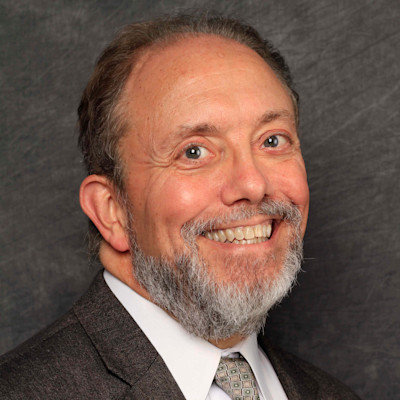
DermWorld talks to David Fivenson, MD, — founder of Fivenson Dermatology in Ann Arbor, Michigan — about steps his practice has taken to reduce its carbon footprint.
DermWorld: Tell us about your practice.
Dr. Fivenson: I’ve been in solo private practice in Ann Arbor, Michigan, for 18 years with a focus on complex medical dermatology. My staff consists of a nurse practioner, two front office staff, two medical assistants, and a research nurse. I’m immunodermatology double-boarded which is why I’ve focused on autoimmune diseases most of my career. It’s a small practice because of the focus on more medically challenging patients; we saw somewhere around 60 to 80 patients a week before COVID. We also do four or five clinical trials per year.
DermWorld: Why did you feel it was important for your practice to reduce its carbon footprint?
Dr. Fivenson: Health care is a significant consumer of energy and produces a lot of waste; we can cut back a little and save a lot. Our patients look up to us and health care professionals are among the most trusted, thus we should be setting examples for everyone. Personally, I became motivated after I saw regulations stripped away during the Trump administration and felt like I needed to do something. In the early 2010s I started paying more attention to global warming, the impact on my hometown, and what was happening along the Lake Huron shoreline where I grew up. From a dermatology standpoint, there are clear associations between the environment and what was showing up in my practice. As an immunodermatologist, I was seeing more vector-borne diseases, temperature-related diseases, skin cancers, and exacerbations of atopic dermatitis, psoriasis, and lupus that seemed to be partially associated with the changing weather cycles here in Michigan. Those were all motivators for me to preserve and protect.
DermWorld: What are some steps you’ve taken toward a more environmentally friendly office?
Dr. Fivenson: There are a lot of simple, easy ways you can save energy and money. The simplest of all is changing some light bulbs. Just get rid of the old-fashioned incandescent and go to LEDs. You can easily save a thousand bucks a year in an averaged-sized office. There are some fun calculators out there to figure out how much you can save; I like to use this one. It takes about two minutes on their website.
We also have our thermostat set to save energy. In the winter, we try to keep the heat between 65-68 degrees, and in the summertime, we are usually between 75-78 degrees.
We had been modestly recycling at our previous space, but I made it a priority in 2017 when we moved to a new office, by building space for recycling containers strategically placed in exam rooms, the front office, and kitchen. We have also pushed vendors for more recyclable material. We have a lot of patients who need biologics that are shipped in big Styrofoam coolers, and have found that if we push the intermediaries (e.g., specialty pharmacies or their contracted shipping services), many can send containers that can be returned and reused.
They send it with a return shipping label; you take out the medicine, close it back up, slap the return label on, and the next time shipper comes, they take it and return it. That really should be the model, because otherwise so much Styrofoam gets thrown out, and eventually ends up in landfills or the ocean!
To save on electricity, you can install motion-detecting lights to decrease the time the lights are on in toilets and exam rooms. Turn off your computers and printers at night. You can buy "smart strips" that will automate these tasks for you too.
One of the simplest ways to accomplish this is a resource that’s free to all of us who are part of the American Academy of Dermatology, and that is a website called My Green Doctor.
DermWorld: What does the program entail?
Dr. Fivenson: My Green Doctor (MGD) provides very straightforward, prescriptive ways to save energy and improve your office’s carbon footprint. They have tangible steps to follow that cost very little and provide real results. It’s easy to register and very quick to get going. When I first started using the program, I thought, "this is so easy." It’s the perfect way for us to have a game plan that’s not just me going around trying to remind everyone to recycle.
MGD encourages users to create what they call a "green team." In my office, our nurse practitioner eagerly took on the role. We were able to incorporate MGD guidelines and a step-by-step workbook into a monthly staff meeting. Once a month, we take five minutes to talk about what we’re going to do that month to be more energy efficient. That led us to gradually becoming more involved with the program, and eventually getting our certification as a green office.
“When I first started using the program, I thought, 'this is so easy.' It’s the perfect way for us to have a game plan that’s not just me going around trying to remind everyone to recycle.”
─ David Fivenson, MD
DermWorld: How long did it take to become certified by My Green Doctor?
Dr. Fivenson: MGD certification was so easy and took about six weeks. You don’t have to complete every workbook to get the certification. We had enough credits after the first five steps, so really it was not that hard. We’ve continued to build on our office’s green philosophy as we’ve responded to COVID. While we are using extra precautions, we also make sure that we are properly disposing of PPE and chose to sanitize with 70% alcohol or plant-based bactericidal cleansers that don’t have toxic waste products that end up in the sewer system.
DermWorld: What impact have you seen from the program?
Dr. Fivenson: While I don’t have a direct comparison, our previous space was only 2,100 square feet and we’ve seen a 20-25% reduction in energy costs in our current 2,400 square foot space. I’d conservatively (no pun intended) estimate that we’re saving somewhere between $2,000 and $3,000 a year by implementing their recommendations.
DermWorld: Would you recommend My Green Doctor to other AAD members?
Dr. Fivenson: Yes. Again, I emphasize that this is a free added benefit for AAD members. It’s very easy. I have a small practice that has a very lean budget. If I can do it, larger practices can too. Larger health care systems that have utilized My Green Doctor have seen savings of around $2,000 per doctor, per year. It’s one of the many resources out there to improve our carbon footprint and make us better citizens of the world.
David Fivenson, MD, is the founder of Fivenson Dermatology in Ann Arbor, Michigan, and member of the Academy’s Expert Resource Group on Climate Change and Environmental Affairs.
The American Academy of Dermatology is a non-profit professional organization and does not endorse companies or products. Advertising helps support our mission.