Learn about the Academy's advocacy priorities and how to join efforts to protect your practice.
Advertisement
Advertisement
Dealing with difficult patients
Answers in Practice
By Emily Margosian, assistant editor, May 1, 2021
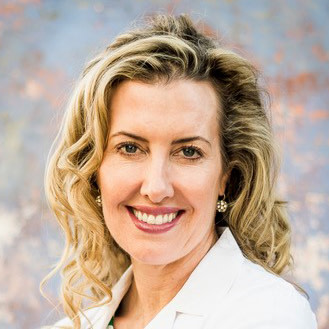
DermWorld talks to Sara Dill, MD, from Luminous Dermatology in Santa Barbara, California, about her tips for improving communication with patients.
DermWorld: Tell us about your practice.
Dr. Dill: I’m in private practice on the West Coast and I see a combination of general medical and pediatric dermatology. I currently see patients three days a week in person and have throughout COVID. Our practice’s patient volume has changed a bit over the past year as we’ve gone through the different waves of the pandemic.
DermWorld: What are some of the most common communication issues you encounter when you’re interacting with patients?
Dr. Dill: There’s room for miscommunication at any point during a visit, any time you’re dealing with people. We all have our own idiosyncrasies and agendas. Patients have their own vision of what they’re hoping to get out of the visit. As physicians, we’re hoping to meet the expectations of our patients and provide good care, but we’re also trying to maintain the safety of our patients and our staff while staying on time. Those sometimes can become competing areas of focus.
I think my biggest challenge is communication with patients in terms of expectations for improvement in whatever condition they came to see us for. I see a lot of acne, and love treating acne in kids and adults. Acne treatment takes a while to see improvement. It’s not something where you see improvement the next day, or the next week. I try to be clear about what’s achievable as far as expectations and timing. I also tend to be a fast talker, so I try to slow down and communicate both verbally and in writing, for example, on how to use medications, or what to expect after a procedure.
DermWorld: How do you handle patients who come in for their appointment with a preconceived notion about their condition?
Dr. Dill: In general, I try not to have too much of a focus on having to be right or needing to convince them. I think when we’re trying to convince people of something, we’re sort of on the offensive and people predictably get defensive. It becomes a battle with the patient, when really, we’re on the same side. What I try to do is agree with the patient as much as possible. I might say something like, ‘Tell me why you think you have that? Let’s talk about it,’ or, ‘I understand why it seems like you might have that condition; that’s certainly something to consider.’
If I think they’re totally wrong, I might give them examples of why that diagnosis doesn’t fit, and then ask them what they think. Sometimes I’ll do some tests that I wouldn’t do otherwise if I feel like it would help the patient come to an agreement. I won’t do anything of course that I feel is going to cause harm, but rather than arguing, ordering a simple lab test to demonstrate they don’t have X or Y to me seems reasonable in terms of meeting people halfway.
If you’re really at an impasse, that may be the point where you say maybe it would help to get a second opinion: ‘Someone else would be a better fit for you; this isn’t something I’m comfortable treating.’
“I think it can go a long way to just acknowledge how someone is feeling, ‘It sounds like you feel really frustrated.’ Often, we’re frustrated too. There’s nothing I want more than for someone’s skin condition to get better. ”
─ Sara Dill, MD
DermWorld: What are some de-escalation tactics you use when a patient is getting emotional or combative?
Dr. Dill: I think it’s important to allow people to have their feelings. When I was in medical school, I wasn’t very comfortable with my own emotions or other people’s emotions. I think it can go a long way to just acknowledge how someone is feeling, ‘It sounds like you feel really frustrated.’ Often, we’re frustrated too. There’s nothing I want more than for someone’s skin condition to get better. I think as physicians we tend to get defensive when we think we aren’t doing a good enough job or someone’s not improving, and that just adds to the tension.
Something I commonly run into is patients who are frustrated that things they want aren’t necessarily covered by insurance. For example, excision of a cyst, which in my area is considered more cosmetic. People pay a lot of money for their insurance and get upset when something was covered before or was put through insurance in the past by a different doctor. So again, I try to agree with the patient. ‘I’m frustrated too, let’s see what else we can try.’ I think it’s also important to tell the patient that you’re not going to give up and will continue to work together to figure things out.
DermWorld: How has COVID changed patient behavior? Are patients more understanding or do they have less patience for the system?
Dr. Dill: I think all of us — physicians and patients — have gone through different emotional stages throughout the pandemic. We all have fewer reserves of patience and less of an ability to go with the flow. When inevitably there are mix-ups at the pharmacy, or we’re doing call backs less frequently because of reduced staff, people get frustrated. We’re all in the same boat, but everyone is a bit more reactive. Some people are very upset about wearing masks; some patients don’t come into the clinic at all because they’re still very isolated. Most people are somewhere in between.
I think, for the most part, patients try to be understanding, but one source of frustration is that dermatology is a physical diagnosis profession. It’s very difficult to do well through a computer, and many things require in-person visits. We’re trying to keep people safe, but COVID has added some complications. A lot of my patients are elderly and can’t hear me very well. They can’t see my lips because I’m masked up. So that adds some extra layers of complexity and difficulty to what’s already a fast-paced practice environment.
Academy practice management tools
Find tools and resources you need to manage your practice, including tips on tackling burnout.
DermWorld: How does your practice handle patients who refuse to comply with COVID safety protocols?
Dr. Dill: We have a couple of practitioners in our office who are doing telehealth visits, so we offer that as an option. We would never refuse to provide care, but patients also have to realize we’re under a mandate to follow our county’s guidelines. We have a duty to protect other people and our staff. If someone’s not wearing a mask, we have amazing front desk staff who explain that we’re unable to see them in person, and they can set up a telehealth visit with one of our providers. Otherwise, we can offer to refer them to another office, although I don’t think anyone is seeing patients without masking right now.
DermWorld: After a challenging encounter, how do you regroup before seeing your next patient?
Dr. Dill: This is a scenario where I think building a practice of self-awareness and self-regulation before you’re in that situation can be super helpful. I have a fairly strong mindfulness practice which requires a lot of inner observation, ‘What am I thinking right now? How am I feeling?’ or taking note of how my body is responding, ‘My shoulders are super tight; my face is red.’
The fastest way to reset is to take three deep breaths. It sounds really simple, but it has a basis in physiology. Three deep breaths where the exhalation is longer than your inhalation, actually very powerfully resets your nervous system from sympathetic overdrive — fight, flight, or freeze — into parasympathetic. Just breathe and tell yourself, ‘Ok, well, that was unpleasant, but this is the next patient and I’m going to bring my best self forward.’ It can be hard to close the door on a bad patient encounter because our brains really want to focus on negative things. Our mind is going to go back to the one negative encounter we had all day rather than the 30 or so other positive patient encounters. It’s important to be mindful of that and take charge of where our attention goes.
Sara Dill, MD, is a dermatologist and certified life coach. She is in private practice at Luminous Dermatology in Santa Barbara, California. Dr. Dill can be reached at saradill.com or sarawdill@gmail.com.
The American Academy of Dermatology is a non-profit professional organization and does not endorse companies or products. Advertising helps support our mission.