












All you need is love.
From the Editor
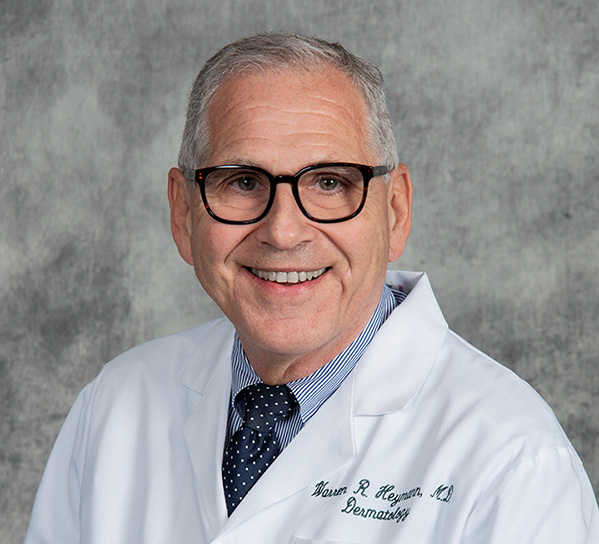
By Warren R. Heymann, MD, FAAD, February 1, 2026
In February 1979, the month before my match in internal medicine, I was struck by Cupid’s arrow during my dermatology elective, which changed the trajectory of my professional life. I have been enamored with the discipline since. You will find a lot to love in this issue of Dermatology World.
My dermatology residency was situated in the Bronx, New York, and I have spent the bulk of my career in Camden, New Jersey. My experience with patients of color has been extensive. For many dermatologists, that may not be the case. As the American populace diversifies, clinicians must be comfortable assessing lesions in patients of all skin types. The AAD established its Clinical Image Collection to assist in this endeavor. Since this issue focuses on granulomatous disorders, I reviewed the photos of granuloma annulare, necrobiosis lipoidica, and sarcoidosis — they are outstanding. I encourage all AAD members to utilize and contribute to this valuable resource, so we can all learn from each other.
Granulomatous disorders represent a broad spectrum of diseases with diverse (and often enigmatic) etiologies, ranging from infections (notably fungal, mycobacterial, parasitic, and viral) to autoimmunity, medications, and environmental exposures. Research can move us from the realm of “idiopathic” to an etiology. The key to therapy is eliminating any known etiologic factor. For the majority of granulomatous diseases, such as those previously mentioned, management focuses on immunomodulation or immunosuppression. Aside from standard treatments such as steroids or antimalarials, newer treatments, including biologics (especially tumor necrosis factor inhibitors) and JAK inhibitors (oral and topical), are increasingly reported off-label as efficacious in these difficult-to-treat diseases. Exciting studies suggest that the rubella virus (both vaccine-derived and wild-type) can persist for years in cutaneous granulomas in both clinically immunocompetent and immunocompromised adults and is associated with atypical (palisaded and necrotizing) chronic cutaneous granulomas. Perhaps this understanding will lead to novel and effective therapies for patients with recalcitrant granulomatous diseases.
Grassroots advocacy supporting dermatology is a component of the AADA’s function. Even the world’s most astute clinicians must abide by the rule “no margin, no mission,” regardless of the practice setting. When accounting for inflation, Medicare reimbursement has decreased dramatically, placing a strain on practice finances and the ability to deliver quality care. In this issue, you will learn how the AADA is focused on addressing and rectifying this situation, and other areas of concern such as the SAFE Sunscreen Standards Act. The late Speaker of the House, Tip O’Neill, popularized the notion that all politics are local. This article encourages and instructs each of us on how to get involved at the grassroots level in our communities to advocate for dermatology. Congratulations to Rachel L. Kyllo, MD, FAAD, on receiving the 2025 AADA Advocate of the Year Award!
The Fab Four’s mantra of “All you need is love” still resonates with me. My love of dermatology has sustained me over the decades, but that would not have been possible without the ongoing love and support of my wonderful wife, Ronnie. On behalf of the entire DermWorld staff, I wish you a beautiful Valentine’s Day to share with your loved ones.
