The Academy has developed a variety of resources to help members quickly get up to speed with teledermatology during the COVID-19 pandemic, including guidance on choosing the right vendor for your practice workflow.
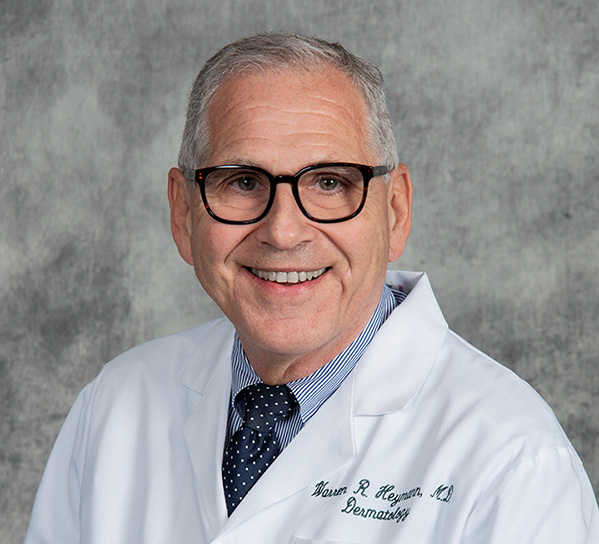
DW Insights and Inquiries: The H syndrome – Understanding Y
It has been more than a decade since the H syndrome was described by Molho-Pessach et al, in their report of 10 patients from six Arab consanguineous families. More than 100 cases have now been reported worldwide. Because of its panoply of findings, it may be underrecognized.
The most important role dermatologists have in H syndrome is recognizing the pathognomonic cutaneous features of the disease and referring patients to our colleagues in genetics and other appropriate subspecialties. On a broader scale, I am perpetually awestruck as to how genetic evaluation by whole exome (or genome) sequencing can precisely define the mutation(s) of syndromes that were previously considered disparate and distinct. Alphabetically, knowing the Y of H gets an A. Keep reading!
Academy encourages participation in new COVID-19 registry
The new Dermatology COVID-19 registry is collecting information about the dermatologic manifestations of the COVID-19 virus. The survey is for all health care professionals worldwide (not just dermatologists) taking care of COVID-19 patients who develop dermatologic manifestations, or dermatology patients with an existing condition who then develop COVID-19 — and a positive COVID-19 test is not required to enter data. Participation takes only five minutes, and photos are not required. Refer others to this registry by telling them to visit www.aad.org/covidregistry.
Dermatology World Weekly talks with Linda Stein Gold, MD, about how dermatologists have stepped in to provide COVID-19 testing at the emergency department at Henry Ford Health System. Read more from Dr. Stein Gold.
Hundreds of thousands of health care workers face layoffs, furloughs during pandemic
According to a HealthLandscape and American Academy of Family Physicians report, by June roughly 60,000 family practices in the United States will close or significantly scale back because of the coronavirus. By the end of June, the number of health care jobs could decrease by 523,000 (including family physicians) with an estimated $43 billion in wage reductions.
As employers, what do dermatologists need to know about the legal implications of requiring remote work, furloughs, layoffs? What do dermatologists need to know about changes to FMLA and sick leave? Learn more with this Dermatology World special content preview.
Medical students may frequently misdiagnose dermatologic disorders in skin of color patients
According to a recent paper in JAAD, medical students more frequently misdiagnosed dermatologic disorders in patients with skin of color compared to those with lighter skin. The study authors quizzed 177 medical students with a series of photos with brief descriptions. The students were asked to diagnose the most likely skin disorder. Approximately 34% of students misdiagnosed squamous cell carcinoma as melanoma in skin of color.
As physician bias creates care disparities, what can dermatologists do to balance the scales? Read more in Dermatology World.
Join the Academy’s skin cancer measure testing project
The Academy is seeking participants for its new skin cancer measure testing project. Your participation will help build better dermatology measures for clinical practice, DataDerm™, and MIPS.
Participants will be asked to provide data on five quality measures on skin cancer, including process and outcome measures addressing appropriate surgical margins, post-operative complications, dysplastic nevi biopsies, biopsy site photos, and tracking of recurrence.
The American Academy of Dermatology is a non-profit professional organization and does not endorse companies or products. Advertising helps support our mission.