












January 4, 2023
IN THIS ISSUE / Jan. 4, 2023
DermWorld Insights and Inquiries: Sniffing out the meaning of perialar intertrigo
Deadline extended for MIPS Extreme and Uncontrollable Circumstances exception application
Academy Advisory Board invites members to submit policy resolutions

Frontal fibrosing alopecia, sunscreen, and actinic damage
A study published in Acta Dermato-Venereologica assessed the presence of actinic damage in patients with frontal fibrosing alopecia (FFA). A cross-sectional study was performed on 101 patients with FFA and 40 control subjects. The presence of actinic damage, including solar lentigines, actinic keratoses, and basal and squamous cell carcinomas, was recorded in both groups, along with sunscreen use.
[What are risk factors for frontal fibrosing alopecia? Read more in DermWorld Weekly.]
Investigators found that patients with FFA had higher rates of sunscreen use. In addition, actinic damage was more frequently found among patients with FFA (69.3%) than among healthy controls (50%). Patients used sunscreens more frequently than did control subjects (83.2% vs. 62.5%), although disease severity and trichoscopic findings did not differ among patients with FFA who did or did not use sunscreen. The authors hypothesize that because patients with FFA had greater actinic damage than control subjects, this may be the reason for the higher use of sunscreens among patients, which might mean that sunscreens may not be the trigger for FFA that has been proposed.
Frontal fibrosing alopecia: The effects of sunscreens and moisturizers. Read more in DermWorld Weekly.
DermWorld Insights and Inquiries: Sniffing out the meaning of perialar intertrigo
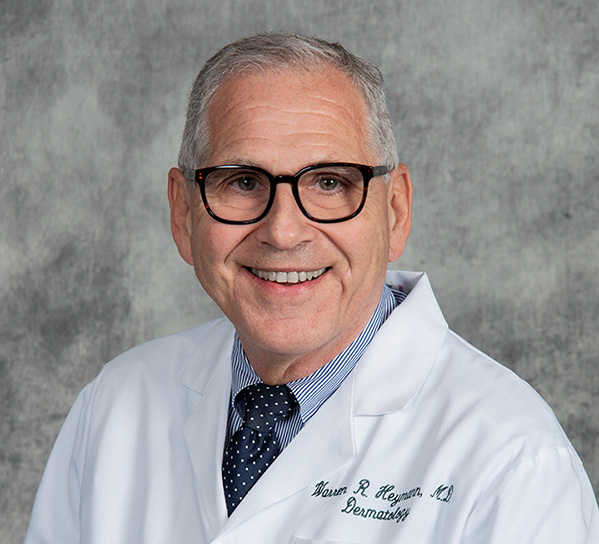
manifestation that has not been previously reported to our knowledge.” According to PubMed, they are correct — theirs is the only report of perialar intertrigo (PI). Despite its absence in the medical literature, I know I have seen this many times — could it be a disease sui generis or is it just a forme fruste of disorders we routinely encounter?
A few days after reading this article, a 52-year-old woman complained of an untreated, asymptomatic rash on the side of her nose that had been present for a couple of months (please see her photo). How timely. She had no evidence of rosacea, acne, seborrheic dermatitis, or psoriasis. I opted to prescribe ketoconazole. Keep reading!
Topical eye medications causing allergic contact dermatitis
In a retrospective study published in Contact Dermatitis, study authors evaluated the frequency of allergic contact dermatitis (ACD) from topical eye medication. A total of 318 patients with suspected ACD were patch tested to an eye medication series with nearly 13% showing a positive reaction.
[Facial contact dermatitis from cosmetic allergens. Read more in DermWorld Weekly.]
Phenylephrine (6.9%), timolol (2.5%), and ketotifen (1.6%) were the most commonly identified allergens. Patch test positive patients were often previously diagnosed with cataract (29.3%) or glaucoma (24.4%).
Aluminum can cause allergic contact dermatitis: Allergen of the Year 2022. Read more in DermWorld Insights and Inquiries.
What challenges and barriers exist when patch testing children? – DermWorld (June 2021)
Cicatricial alopecia following ACD from hair dye – DermWorld Weekly (January 2022)
Achieving an itch-free state using topical ruxolitinib
Authors of an article published in JAAD evaluated the achievement of an itch-free state using data from two identically designed phase 3 studies (TRuE-AD1/TRuE-AD2). Ruxolitinib rapidly improved itch and allowed for an itch-free state in nearly half of patients. The difference versus vehicle in itch NRS 0/1 was statically significant about 36 hours after the first application and remained significant through week eight. The median time to achieve itch NRS 0/1 was 14 and nine days for 0.75% and 1.5% ruxolitinib cream, respectively.
Read more about understanding and treating chronic itch in DermWorld.
JAKne is on the horizon – DermWorld Insights and Inquiries (July 2022)
FDA approves first vitiligo treatment for skin repigmentation – DermWorld Weekly (July 2022)
Ruxolitinib cream for cutaneous lichen planus – DermWorld Weekly (May 2022)
Deadline extended for MIPS Extreme and Uncontrollable Circumstances exception application
CMS has extended the deadline for the 2022 MIPS Extreme and Uncontrollable Circumstances exception application to March 3, 2023. This application allows clinicians, groups, and virtual groups to request reweighting of MIPS performance categories due to the COVID-19 public health emergency. Please note that applications received between Jan. 3 and March 3, 2023, won’t override submitted data for individuals, groups, and virtual groups. Get additional details and access the application.
Academy Advisory Board invites members to submit policy resolutions
The Academy’s Advisory Board invites all Academy members as well as state, local, and specialty dermatology groups to submit proposed AAD/A policy resolutions on issues of interest and/or concern. The Advisory Board convenes every year at the AAD Annual Meeting to deliberate on issues of importance to individual practitioners and propose new policies to the Academy’s Board of Directors for consideration.
If there is an issue of interest and/or concern, now is your opportunity to submit a resolution. If passed by the Advisory Board, it will go directly to the AAD/A Board of Directors. To get started on a resolution, determine who your state or local dermatology society’s Advisory Board Representative is by using the state society directory, and work with them to draft a policy resolution. The resolution should ask for the Academy to take specific action relating to advocacy or a general Academy policy.
To ensure full consideration, submit resolutions Jan. 14-Feb. 7. The author or Advisory Board representative of the resolution must be present during the Reference Committee Hearing on Friday, March 17, at 3 p.m. (CT) to introduce and discuss the resolution. Even if you do not submit a resolution, the Academy strongly encourages all members to attend the Reference Committee Hearing to hear the debate on the proposed resolutions. The full Advisory Board will vote on the resolutions at the General Business Meeting on Sunday, March 19 at 3 p.m. (CT).
To learn more, visit the Advisory Board website and view the resolution template. In order to submit a resolution, your Disclosure of Outside Interests (DOI) statement must be updated.
Please submit all resolutions and/or questions regarding the process to Heather Schultz at hschultz@aad.org by Feb. 7.
