Caring for older patients during COVID-19? What you need to know.
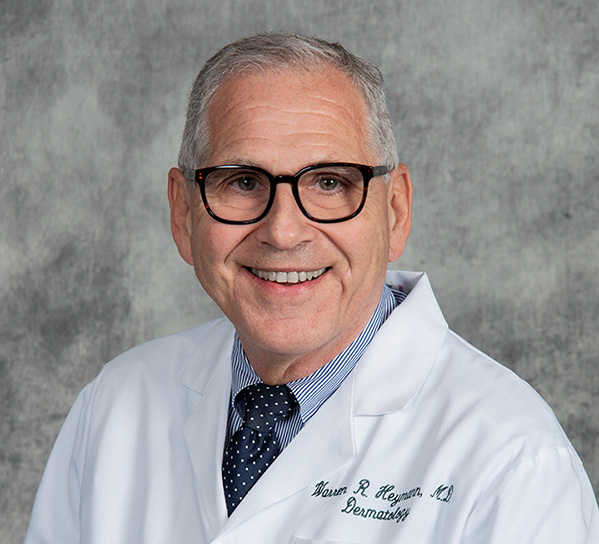
DW Weekly talks to Daniel Butler, MD, co-founder and co-chair of the Academy’s Geriatric Dermatology Expert Resource Group, about caring for older patients during the COVID-19 pandemic.
DW Weekly: Can you provide a little background on the Academy’s Geriatric Dermatology Expert Resource Group (ERG)?
Dr. Butler: We started the Geriatric Dermatology Expert Resource Group with the backing of the Academy in 2018 and had our first meeting at the AAD Annual Meeting in 2019. We have been slowly growing our membership with experts from around the country and around the world. Our mission from the beginning has always been to find out what the challenges are when managing older patients in dermatology and acknowledging that their problems are understood as unique — not just because of their age but in the context of someone’s entire wellbeing and their entire health.
DW Weekly: Why did the Academy’s Geriatric Dermatology ERG create a task force on caring for older patients during the COVID-19 pandemic?
Dr. Butler: When COVID-19 hit, it really struck a lot of different chords in what we are trying to address with the Geriatric Dermatology Expert Resource Group. It became very clear very quickly that this is an at-risk patient population and dermatologists, as vital contributors to the health of older adults, would be challenged in dealing with this new risk. About three or four weeks ago, we sent out a message to all our ERG membership asking for ideas on successful practices or challenges they encountered in managing older patients during the pandemic. We then convened a task force to discuss best practices and challenges. We ultimately came up with recommendations for our group, who specialize in seeing older adults, on how to navigate these issues. The hope is that we can provide better care, nationally and internationally, for these patients, while also providing a resource for our colleagues who may have similar questions and challenges. Keep reading!
DW Insights and Inquiries: The profound dermatological manifestations of COVID-19: Part V – Pediatric multisystem inflammatory syndrome
If there is anything we have learned about SARS-CoV-2, it is that we should expect the unexpected. An analysis from China has shown that children younger than 10 years old account for only 1% of COVID-19 cases, similar to the proportion for SARS-CoV and MERS-CoV epidemics. There is clear evidence that children are susceptible to SARS-CoV-2 infection, but frequently do not have notable disease; which is why this has so perplexed researchers. It is conceivable that children could be facilitators of viral transmission. Over recent weeks, however, there has been an increasing number of cases of children linked to the coronavirus that are profoundly ill — despite the media attention, this is still a rare phenomenon. Keep reading!
Register for the Academy’s virtual meeting experience, AAD VMX
The Academy has developed a virtual meeting experience called AAD VMX that will be held June 12-14, 2020. Participants will join the Academy for a three-day live and online experience from the comfort and safety of their home and/or office. AAD VMX offers at least 24 CME credits, more than 14 robust sessions on multiple clinical topics, live Q&As with presenters, 900 posters, a virtual exhibit hall, and more! Register now.
E/M changes on the horizon
In 2018, CMS proposed significant changes to the way office evaluation and management (E/M) services would be reimbursed, including:
One fee for levels 2 through 5 for a new patient and levels 2 to 5 for an established patient;
New add-on G codes would be used that were intended to increase payment for care of complex patients; and
Payment for the E/M service or the procedure would be reduced by 50% when the E/M is reported with a modifier 25.
The AADA advocated, alone and as part of coalitions, to protect physician payments, targeting CMS, HHS, members of Congress, and the house of medicine. As a result of the Academy’s advocacy efforts, CMS agreed to drop its proposal and accept the new E/M codes developed by the AMA CPT Editorial Panel and valued by the Relative Value Update Committee (RUC). These accepted changes will take effect on Jan. 1, 2021.
Learn more about the upcoming E/M code changes as well as what else is coming down the Medicare payment pike in Dermatology World.
“It wasn’t a choice. It was a responsibility.”
DW Weekly talked to Rishi Chopra, MD, a second-year dermatology resident at SUNY Downstate in Brooklyn, about his experiences working on the front lines of one of three hospitals designated by Gov. Cuomo as COVID-only centers in New York.
“When I hung up my stethoscope almost a year ago, I never imagined that I would ever have to pick it up again. However, here we are. I am now working in a COVID-only unit,” Dr. Chopra said.
He recently reported that a typical day involves 12-hour shifts, working on a pediatrics unit that has been converted to an adult COVID unit due to the influx of patients. Alongside him are ophthalmologists, pediatricians, radiologists, and others.
“When our hospital asked for physician volunteers, it wasn’t a choice, it was a responsibility,” Dr. Chopra said. “To my profession, to my colleagues, but most importantly to my community. I was born and raised in New York, graduated from medical school at SUNY Stony Brook, and now live in Brooklyn. My heart is bleeding for this city.” Read Dr. Chopra’s story.
FDA approves new hyaluronic acid lip filler
The U.S. Food and Drug Administration (FDA) has approved Restylane® Kysse, a hyaluronic acid filler for the lips and upper perioral rhytids in adults over 21 years old. The filler is proven to last for up to one year and is the first filler specifically indicated for lips using OBT (Optimal Balance Technology). Phase 3 trial results demonstrated an improvement in lip fullness with a lower amount of Restylane Kysse (1.82 mL) versus the comparator (2.24 mL). Additionally, 78% of patients reported satisfaction with the results after one year.
Read about the latest FDA-approved dermal fillers in Dermatology World.
Derm Coding Consult: CMS clarifies telehealth and telephone coding during COVID-19 public health emergency
On April 30, 2020, CMS announced a second round of expansive changes to telehealth coding as well as regulatory revisions. These changes aim to ensure access to care and flexibility in the health care system during the COVID-19 public health emergency. These recent changes, found in CMS’s Interim Final Rule #5531, address telephone E/M services as well as a clarification regarding the definition of “time.”Learn more in Derm Coding Consult.
The American Academy of Dermatology is a non-profit professional organization and does not endorse companies or products. Advertising helps support our mission.