Efficacy of combination topical finasteride and minoxidil in male androgenetic alopecia
An article published in the Archives of Dermatological Research evaluated the effectiveness of combining topical finasteride and minoxidil for male androgenetic alopecia (AGA). This 12-week randomized controlled trial divided subjects into two groups: Topical finasteride 0.1%-minoxidil 5% and topical minoxidil 5%. Significant increases in hair density, diameter, and terminal hair rate, and decrease of vellus hair rate were observed at each visit compared to baseline, yet there were no differences between the two groups.
[Topical finasteride with minoxidil vs. topical minoxidil alone for male-pattern androgenic alopecia. Read more.]
Systemic side effects included libido reduction (control), mild erectile dysfunction, and chest pain (treatment). Itching, shedding, and dandruff were similar between groups. The authors concluded that combining topical finasteride 0.1% with topical minoxidil 5% has similar safety and effectiveness for increasing hair density and diameter in male AGA patients compared to topical minoxidil 5%.
DermWorld Insights and Inquiries: Loss and legacy — A tribute to Robert F. Duffy, MD
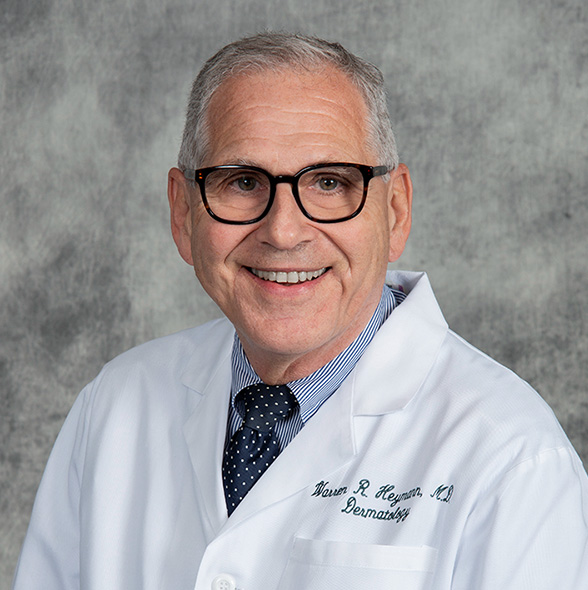
On Thursday, May 15, 2025, while seeing patients with my residents, I received a text from one of my partners requesting that I call her ASAP. I assumed it was an urgent practice-related problem, but I was unprepared to hear her words, “Warren, Robby was found dead this morning.” You have probably not heard of Dr. Robert F. Duffy, but I have no doubt you would have if he lived beyond his 33 years. Dr. Duffy enriched my life in so many ways. I want to honor him by asking you to spend a few moments reading the eulogy I delivered on May 22, 2025 — all of us have much to learn from Dr. Duffy, even if posthumously. Robby was a star with a life and career trajectory toward the cosmos. He was on the threshold of doing all he loved — establishing his academic career in pediatric dermatology, planning a wedding with his partner Matt, buying their vintage home together, and cruising the New Jersey highways in his long-desired purple Alfa Romeo. Keep reading!
FDA approves roflumilast foam for scalp, body psoriasis
The FDA has approved roflumilast foam 0.3%, a PDE-4 inhibitor, as a once-daily topical treatment for plaque psoriasis in adults and adolescents aged 12 years and older. The drug met both of the study’s co-primary endpoints: 66.4% were shown to have attained Scalp-Investigator Global Assessment (S-IGA) Success compared to 27.8% with vehicle. Additionally, 45.5% attained Body-IGA Success compared to 20.1% in the vehicle arm. A second trial met its primary endpoint with 56.7% achieving S-IGA Success compared to 11% on vehicle, and 39% achieving B-IGA Success compared to 7.4% with vehicle. The researchers also observed a significant reduction of itch.
The most common reactions (≥1%) included reports of headaches (3.1%), nausea (1.7%), diarrhea (2.5%), and nasopharyngitis (1.3%).
Excision specimens show residual basal cell carcinoma
Authors of a study published in Dermatologic Surgery aimed to determine the rate of residual basal cell carcinoma (BCC) after the initial shave biopsy. A retrospective chart review was conducted that reviewed excision specimen pathology reports of previously biopsy-proven basal cell carcinomas for the presence of residual tumor.
Nearly 40% of patients had residual BCC after an initial shave biopsy. A significant relationship was found between larger lesions, longer time between biopsy and excision, and lesions on high-risk body sites with increased odds of residual BCC. A significant relationship was found between negative or not specified margins on shave biopsy with decreased odds of residual BCC. The authors concluded that a large percentage of patients have residual BCC following initial biopsies.
The AADA continues productive discussions with CMS advocating for revisions to recent CLIA laboratory director requirements that would ensure that all board-certified dermatologists are appropriately approved as lab directors of dermatology labs.
The Academy’s workgroup, comprised of Mohs surgeons, dermatopathologists, and general dermatologists, have met with CMS to advocate on behalf of all dermatologists, and because of this ongoing advocacy, CMS has committed to working directly with individual dermatologists to address any issues related to their CLIA applications.
What you need to know
If you are already serving as a lab director you are effectively “grandfathered” under the current regulations, and no further action is required. If you are a first-time lab director or plan to change practice locations, open a new lab, or become a director of a different lab, you may be subject to the new requirements. Experience gained during dermatology residency or an ACGME accredited fellowship may count toward this requirement.
What you can do
The AADA is advising members to continue applying to be lab directors. CMS is committed to working with dermatologists individually to resolve any compliance issues related to the new requirements.
If you encounter any issues, contact AADA at regulatory@aad.org. The Academy will coordinate directly with CMS to help ensure your application receives appropriate review and to assist in resolving any issues.
Advocacy win: Indoor tanning tax safe from repeal
During the House committees’ budget reconciliation negotiations, Congress considered repealing the AADA-endorsed excise tax on indoor tanning services. The AADA opposed the repeal of this tax, and it was omitted from the final version that the House passed. The bill will now go to the Senate where more changes are expected.
The AADA opposes indoor tanning and supports policies aimed at protecting the public from these risks, including a ban on the production and sale of indoor tanning equipment, restrictions on minors’ use of tanning equipment, clear labeling outlining the risks of indoor tanning, and the federal indoor tanning tax.
The tax also serves as a deterrent to help mitigate the risks associated with indoor tanning, which are often not shared with customers of indoor tanning facilities. The indoor tanning industry has a history of misleading advertising, which has been repeatedly been cited by the Federal Trade Commission. The tax, which the AADA strongly lobbied for, was originally implemented to help fund the Affordable Care Act and discourage the use of indoor tanning.
Final reminder: Open Payments data correction ends Friday
The 15-day data correction period for Open Payments ends this Friday, May 30. This is your last chance to resolve any outstanding disputes with covered recipients before data is published. Unresolved disputes after the deadline will be marked as disputed in the public record. Be sure to work directly with covered recipients to finalize any corrections in good faith. Learn more.
Advertisement
The American Academy of Dermatology is a non-profit professional organization and does not endorse companies or products. Advertising helps support our mission.