












PR, social, and media tips
Tips for interviews
Media interviews provide an excellent opportunity for you to educate the public about the importance of skin, hair and nail health. No matter who the reporter is (i.e., local or national) or how the interview is conducted (i.e., in person, by phone or over email), keep the following tips in mind.
When you are contacted by the media
When you receive a media inquiry, respond as soon as possible. If your schedule does not allow you to participate, you should decline the request. Do not ignore the inquiry. A response, whether or not you can participate in the interview, is a great way to ensure that the reporter will continue to contact you in the future.

Queries by the media
When you receive a media inquiry, respond as soon as possible, even if the answer is no, so the reporter will consider you in the future.
If you are a member of the Academy’s Media Expert Team and are unable to participate in an interview, please notify the Academy as soon as possible. Another Media Expert Team member can participate in the interview so the specialty can be represented in the story.
If you have questions about the topic of a media inquiry, or if you would like to see if the Academy has any background information on the topic, please contact the Communications Department at (847) 330-0230 or mediarelations@aad.org. You also can reference the Academy’s Key Messages, which includes talking points on the skin, hair, and nail conditions most commonly requested by the media.
Before the interview
Confirm the time, date and, for live interviews, location of the interview, either by phone or email.
Provide the reporter with a short personal biography and offer additional print materials about the topic(s), such as fact sheets and website links. You can contact the Academy to request background materials.
Do your homework. Prepare for the interview by reviewing all the updated facts and figures about your topic, and by reading articles by the reporter or watching the program on which you will appear.
If you have photos of skin, hair, or nail conditions relevant to the story, and your patients’ permission to use them, offer them to the reporter.
If participating in a broadcast interview or meeting the reporter in person, arrive at least 15 minutes early to familiarize yourself with the setting and relax.
If you are participating in the interview by phone during business hours, make sure your staff is aware that you are expecting a phone call from the media, and clear your patient schedule to allow enough time for the interview, typically 15-20 minutes. If you have time constraints, let the reporter know.
During the interview
Know the key messages you want to communicate and state them early. Repeat the key messages at least twice during the interview so the reporter knows you think this information is important. Use phrases such as, "It is very important to remember ..." or "Let me go back to an important point I mentioned earlier ..." or "Let me emphasize one thing ..." By stressing the importance of your messages, you’ll make them more memorable for the reporter and the audience.
Speak in short, concise sentences.
Relax and speak naturally.
Use layman's terms and avoid technical language and medical jargon.
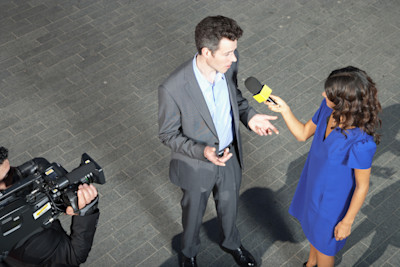
During the interview
Use layman's terms and avoid technical language and medical jargon.
Use concise examples, brief stories, and appropriate anecdotes when possible to illustrate your message.
Anticipate questions that will come up during the interview and be prepared to use those questions as launching pads for your key messages.
Before you complete the interview, summarize your key messages again. If the reporter asks, “Is there anything you would like to add?” repeat your key messages in 15 seconds or less. Practice this key message wrap-up until you can say it naturally.
Wrap up your interview with a “call to action” for the public. For example, you can direct them to the Academy’s website for more information, or encourage them to find a free skin cancer screening.

After the interview
Thank the interviewer for his or her time at the conclusion of the interview.
Provide positive feedback about the interview. Remember, part of your goal is to build relationships with local media.
Following the interview, send the reporter a note or email thanking him or her for the interview and suggesting ideas for future stories with which you can assist. This is a great way to keep your name in the interviewer's mind for future stories.
Send an email to Academy staff at mediarelations@aad.org to let us know about the interview.
Special considerations for television interviews
If possible, avoid sitting between two interviewers so you won’t have to turn back and forth to answer questions.
Answer the interviewer directly. Do not talk into the camera unless directed to do so.
Lean slightly forward in your chair. This posture makes you appear interested.
Check your clothes to make sure they do not appear wrinkled or rumpled when you are sitting. Unbutton your suit jacket when you sit.
Use natural hand gestures.
Do not wear white; television lights can make a bright white shirt or blouse flare. Off-white, beige, or pastels are preferred.
Avoid busy patterns, such as herringbone. They tend to "dance" under television light.
Wear calf-length socks with trousers to prevent skin showing between the sock top and trouser cuff.
Keep jewelry simple. Avoid dangling earrings, flashy rings, and watches. Remove coins, pens, and other bulky or noisy objects from pockets.
Remember to turn off your cellphone so it does not interrupt your interview.
