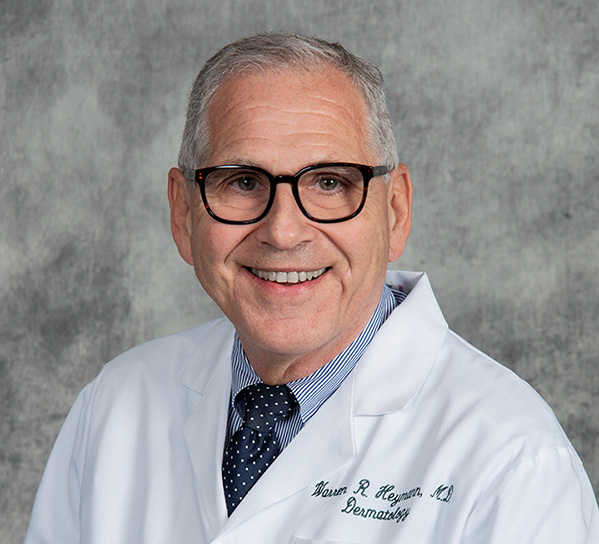
Patients who won’t wear a mask: Avoiding a lawsuit
When your waiting room is filled with patients wearing masks and one individual refuses, what can a physician or staff member do? What should or must be done? Carolyn Buppert, MSN, JD, poses these questions and reviews a practice’s legal obligations in a recent Medscape article.
Currently, there are no court decisions to provide guidance about whether it is negligence to allow an unmasked patient to remain in a medical practice, said Buppert. Nor is there case law to determine whether sending a patient home without being seen would constitute patient abandonment.
Buppert outlines the four elements of negligence a plaintiff would need to prove: duty, breach, damage, and causation.
“Those who run medical offices and facilities have a duty to provide reasonably safe public spaces. Unmasked individuals are a risk to others nearby, so the ‘breach’ element is satisfied if a practice fails to impose safety measures. Causation could be proven, or at least inferred, if contact tracing of an individual with COVID showed that the only contact likely to have exposed the ill individual to the virus was an unmasked individual in a medical practice’s waiting room, especially if the unmasked individual was COVID-positive before, during, or shortly after the visit to the practice,” she explained.
What about patients who refuse to wear masks for medical reasons? “A medical office is the perfect place to test an individual’s ability or inability to breathe well while wearing a mask. ‘Put the mask on and we’ll see how you do’ is a reasonable response. Monitor the patient visually and apply a pulse oximeter with mask off and mask on,” she writes. Continue reading for practical tips on how to deal with patients or companions of patient who refuse to wear masks.
Any views expressed above are the author's own and do not necessarily reflect the views of DermWorld Weekly.
DermWorld Insights and Inquiries: Slammed by slime
Visiting Nickelodeon Studios in Orlando, Florida in the early 1990s was a religious experience for my family. Watching a live recording of Double Dare, my daughters were fervently praying to be among the chosen few to be slimed, while my wife and I were pleading to the slime gods to spare our children. Fortunately (from the parental perspective), the adults prevailed.
Slime’s appeal has been unrelenting, reaching new heights of popularity with the internet. If you Google search “How do you make slime?” you will instantly have more than 216 million options to learn from. According to Sharon Jacob, “Basically, slime is a mixture of borate ions (either from contact lens solution and baking soda or from Borax™ detergent added to polyvinyl acetate glue [such as common school glue]), leading to cross‐linking of the polymers in the glue to form a stretchy slimy green gel. To make it more attractive, food coloring, shaving cream, glitter, or cornstarch can be added. The variety of substances that can be used to make slime, including shampoo, can greatly increase the risk of irritant and allergic contact dermatitis.” Keep reading!
Derm Coding Consult: New CPT code 99072 for COVID-19 PPE
During the special COVID-related Panel Meeting held on Sept. 8, 2020, the American Medical Association (AMA) approved and published a new CPT code under special services, procedures, and reports for immediate use.
CPT code 99072 - Additional supplies, materials, and clinical staff time over and above those usually included in an office visit or other non-facility service(s), when performed during a Public Health Emergency as defined by law, due to respiratory-transmitted infectious disease
The code was created as a new practice expense code specifically for use during a declared Public Health Emergency (PHE) as defined by law due to respiratory-transmitted infectious disease. The code is intended to capture the rising costs of safely providing patients with access to high-quality care during in-person interactions with health care professionals. Learn more about the new CPT code.
Pharmacists can vaccinate kids under latest guidance
The Department of Health and Human Services (HHS) issued guidance under the Public Readiness and Emergency Preparedness Act (PREP Act) to expand access to COVID-19 vaccines once available.
The guidance authorizes state-licensed pharmacists to order and administer — and state-licensed or registered pharmacy interns acting under the appropriate supervision to administer — COVID-19 vaccinations to children three years old or older. The updated policy “preempts any state and local laws that prohibit or effectively prohibits those who satisfy these requirements from ordering or administering COVID-19 vaccines,” the agency said.
Read more about how pharmacists are assuming a greater role in dermatology patient care in DermWorld.
DermWorld’s First Person column is the place to tell it. Share your personal stories about the thrills, challenges, and insights of practicing dermatology — we’d like to know what’s on your mind. Email your story idea to dweditor@aad.org. Wondering what an ideal submission looks like? Check out “In praise of redneck dermatology.”
DermWorld reserves the right to edit, publish, or not publish any submitted content, and to request and disclose the author’s relevant conflicts of interest.
FDA, UMD seek feedback on compounded drug use
In collaboration with the FDA, the University of Maryland Center of Excellence in Regulatory Science and Innovation (M-CERSI) is conducting an anonymous survey to better understand how compounded drugs containing bulk drug substances are used in clinical practice. Protecting dermatologists’ access to compounded drugs is a top advocacy priority for the AADA and quality data will help the Academy effectively advocate for the specialty and its patients.
The goal of this survey is to understand how medical practitioners prescribe and administer compounded drugs. The survey feedback will help the FDA develop a list of drugs that can be used in bulk compounding by 503B outsourcing facilities. The anonymous responses will be shared with the FDA as part their project, “Clinical Use of Drugs Including Bulk Drug Substances Nominated for Use in Compounding by Outsourcing Facilities.”
Several substances are being surveyed as it relates to the specialty, including lidocaine, epinephrine, salicylic acid, lactic acid, thymol iodide, and others. Provide your input today.
The American Academy of Dermatology is a non-profit professional organization and does not endorse companies or products. Advertising helps support our mission.